|


|
College of Medicine and Health
Sciences
|
SCHOOL OF PUBLIC HEALTH
DEPARTMENT OF COMMUNITY
HEALTH AND SCIENCE
MASTER OF PUBLIC HEALTH
DISSERTATION

Prevalence of HIV Infection and Factors Associated with
Discordant Couples Receiving
HIV Test in Gasabo District
Case study: Kibagabaga level II Teaching
Hospital
Done by
HABAKUBAHO DESIRE
Reg.NO:
222000904
Supervisor: Ass. Prof. Lawrence RUGEMA
Co-Supervisor: Dr. SIMBI
Clarisse Marie Claudine
September, 2024

DECLARATION

Student name: HABAKUBAHO DESIRE Reg. Number:222000904
Date and signature:/02nd /09/2024
|
Co-Supervisor: Dr SIMBI Clarisse Date and signature:
2nd /...09..../ 2024
|
|
Supervisor: Ass. Prof. RUGEMA Lawrence Date and signature:
...2nd /09./ 2024


ACKNOWLEDGEMENT
My heartfelt thanks visit all those who helped me to complete
this research.
I would love to thank the college of Rwanda, the university of
medication and health Sciences,
faculty of Public fitness for his or her support.
iv
ABSTRACT
Introduction: HIV-discordant couples, where
one partner is infected and the other is not, face significant risks of HIV
transmission within stable relationships. In Rwanda, despite a low overall HIV
prevalence of 3% and limited data on HIV-discordant couples, understanding and
addressing the specific challenges faced by these couples is crucial for
advancing HIV prevention efforts. This study examined the Prevalence of HIV
infection and associated factors among discordant couples who received HIV
tests at Kibagabaga Hospital.
Methods: Using a case study approach, the
research involves 254 discordant couples who went into HIV testing services
from 2020 to 2024, and they were recruited through purposive sampling. Data
collection includes patient interviews and questionnaires, with subsequent
statistical analyses to identify prevalence and risk factors.
Results: Between 2020 and 2024, the overall
HIV prevalence remained at 50% while stratifying in years of 127 cases
positive, in 2020 was 18.1, and in 2022 was 31.5%, and in 2024 was 13.4%. HIV
prevalence over the years kept changing where in 2020 significant associations
with HIV infections including multiple sexual partners (OR: 6.7,
95%CI:2,4-10.30), Age of >45 years (OR: 2.3, 95%CI: 1.1, 5.12), and
Occupation, Driver (OR: 4.77,95%CI: 1.71, 13.31).
Keywords: Prevalence HIV-Discordant Couples,
HIV Infection, HIV Testing, Risk Factors.

TABLE OF CONTENTS
DECLARATION ii
ACKNOWLEDGEMENT iii
ABSTRACT iv
TABLE OF CONTENTS v
LIST OF TABLES viii
LIST OF FIGURES 9
CHAPTER 1. INTRODUCTION 10
1.1 Background 10
1.2 Problem statement Error! Bookmark not
defined.
1.3 Justification of the study 11
1.3.1 To the researchers 11
1.3.2 To the University 12
1.3.3 To the policymakers 12
1.3.4 To the community 12
1.4 Study objectives 12
1.4.1 Main objective 12
1.4.2 Specific objectives 12
1.5 Research questions 13
1.6 Organization of the study 13
CHAPTER 2. LITERATURE-REVIEW 15
2.1 Theoretical-literature-review 15
2.2 Theoretical review 16
2.4 Conceptual-framework 17
CHAPTER3:METHODOLOGY 18
3.1 Studysetting 18
3.3 Study population 18
3.4 Sample size 19
3.5 Sampling technique 19
3.8 Data Analysis 20
vi
3.9 Ethical-considerations 20
CHAPTER 4: RESULTS 21
4.1. The sociodemographic characteristics
21
4.4. Logistic regression of the associated risk
factors of HIV infection among the
discordant couples 26
CHAPTER 5. DISCUSSION 29
5.1 Implications of the Study 30
5.2 Strengths and Limitations 30
CHAPTER 6. CONCLUSION AND RECOMMENDATIONS
32
6.1 Conclusion 32
6.2 Recommendations 32
REFERENCES 33
Appendix 1. Ethical clearance 41
Appendix 3. Research authorization letter
42
viii
LIST OF TABLES
Table 1: Socio-demographic characteristics (N=254) 21
Table 2: shows the socio-demographic characteristics and HIV
infection among discordant couples
23
Table 3 shows the primary characteristics and HIV infection
among discordant couples 35
Table 4: Logistic regression of the associated risk factors of
HIV infection among the discordant
couples 27
9
LIST OF FIGURES
Figure 1:Conceptual framework on the prevalence of HIV
discordance and associated risk
factors among couples receiving HIV test (Source: The
researcher, 2024) 17
Figure 2: shows HIV infection prevalence among discordant
couple 22
10
CHAPTER 1. INTRODUCTION
1.1 Background
HIV-discordant couples could benefit from such measures to
help suppress the HIV viral load of the affected companion and decrease the
hazard of HIV transmission to at least 60% (Temam & Ali, 2012)
HIV-discordant couples make a contribution the highest to HIV infections in
Africa, serving as a chance to sound fitness for themselves and their
companions if now not well managed. that is usually now not continually
possible due to the fact maximum discordant companions keep their status away
from their partners for different reasons. young human beings who've intentions
of having married to their friends who aren't superb might face special
demanding situations.
couples who acquired the disease during marriage worry being
stigmatized, deserted, or violated, by their terrible companions once their
repute is understood. most of these have an effect on the mental stories of
HIV-discordant couples in extraordinary ways (Bunnell et al., 2005).
In Tanzania, an HIV and AIDS population-primarily based survey
confirmed that a number of the couples inside the cutting-edge union, ninety 3%
have been HIV concordant negative, 2% have been HIV concordant first-rate even
as five% have been HIV discordant; while in three% of sero-discordant
relationships, guys companion come to be infected and the women were no longer.
In most instances, the proportion of inflamed ladies and men in the ones
relationships is form of similar (Natchu et al., 2012).
In Rwanda, HIV incidence is the bottom in Africa and there may
be limited records on HIV-discordant couples which may also cause a paucity of
critical facts important to improve international HIV desires. For greater than
15 years nowadays, the prevalence of HIV in the entire populace in Rwanda has
remained at 3%, on the equal time as the disease occurrence amongst couples in
Rwanda is 2.9% (Nsanzimana,2019). however the presence of this population,
there is a paucity of records within the literature approximately
HIV-discordant couples. it's far in opposition to the above background that
this test goals to have a have a look at the prevalence of HIV discordance and
related threat elements among couples receiving HIV test so as to reveal
records as a manner to be useful in supporting the lives of sero-discordant
couples and commonly human beings residing with HIV.
1.2 trouble announcement
11
the general public of couples are blind to their reputation or
presume to have the same repute as that in their partners (HIV attempting out
with the aid of proxy), which also refers to estimating an character's HIV
repute primarily based on the appeared HIV fame in their sexual associate, in
preference to direct trying out. This technique is regularly utilized in
population-based research where trying out each person is impractical, however
it is able to bring about inaccuracies because of functionality discordance
between partners' HIV statuses.
In Rwanda, no matter improvements in HIV prevention and
remedy, HIV infections amongst couples remains a
e4028a5c6dae3ad5086501ec6f3534d0 undertaking. besides, discordant couples, in
which one accomplice is HIV- 86f68e4d402306ad3cd330d005134dac at the same time
as the alternative is HIV-horrible, face particular demanding situations in
handling their fitness and stopping transmission. despite the importance of
understanding the superiority and determinants of HIV contamination in couples,
there is an opening within the present literature regarding its prevalence and
related hazard factors among couples undergoing HIV trying out (Nsanzimana,
2019)
This look at goals to address this gap via the usage of
investigating the prevalence of HIV infections and discordance and identifying
the danger elements associated with them amongst couples receiving HIV finding
out offerings in Gasabo district, due to the reality this location has a
sizeable metropolis populace with a excessive incidence of HIV discordant
couples. furthermore, Gasabo district has accessible healthcare centers and a
diverse demographic, providing a consultant pattern for statistics the
superiority of HIV infections, discordance and associated danger factors in an
town placing. by the use of information the quantity of infections and
discordance in couples, and the factors contributing to them, interventions can
be tailored extra efficiently to reduce transmission risk and enhance the
overall health effects of each companions.
1.3 Justification of the study
The examine is widespread to the subsequent stakeholders:
1.3.1 To the researchers
This have a take a look at will help researchers make
contributions know-how to the field of HIV/AIDS epidemiology and public
fitness, as it will fill gaps in present literature, presenting a higher
understanding of the prevalence of HIV discordance and its determinants amongst
couples present process HIV trying out.
12
1.3.2 To the University
The study and its findings will help the students and
academics of the university in carrying out further investigation into HIV
discordance in married couples. The have a look at might be some of the pool of
different research studies performed at the college degree.
1.3.3 To the policymakers
research findings could have implications for policy
improvement and implementation at neighborhood, national, and global
degrees.
formulate regulations aimed toward enhancing HIV checking out
uptake among couples, improving get entry to to prevention and treatment
offerings, and addressing unique danger elements associated with HIV
1.3.4 To the community
The study findings will help raise awareness within the
community about the risks associated with HIV discordance and the importance of
HIV testing, particularly for couples. Increased awareness will lead to more
proactive health-seeking behaviors, including regular HIV testing and
engagement in preventive measures. Understanding the prevalence and risk
factors associated with HIV discordance can inform targeted interventions aimed
at reducing HIV transmission rates within the community. By identifying
high-risk groups and addressing specific risk factors, interventions can be
tailored to effectively prevent HIV infections and reduce the overall burden of
the disease.
1.4 Study objectives 1.4.1 Main objective To
determine the HIV infection and associated risk factors among discordant
couples receiving HIV tests in Gasabo District.
1.4.2 Specific objectives
? To determine the prevalence of HIV infections among discordant
couples who received HIV tests in Kibagabaga Hospital from 2020 to 2024.
? To determine sociodemographic, behavioral, clinical,
psychological, and relationship factors associated with HIV prevalence among
couples who received HIV tests in Kibagabaga Hospital from 2020 to 2024.
13
? To determine the association between HIV Infection and
sociodemographic, behavioral, clinical, psychological, and relationship factors
among discordant couples who received HIV tests in Kibagabaga Hospital from
2020 to 2024.
1.5 Research questions
i. What is the prevalence of HIV infection among discordant
couples who received HIV
tests in Kibagabaga Hospital from 2020 to 2024?
ii. What are sociodemographic, behavioral, clinical, and
relationship factors associated
with HIV prevalence who received HIV tests
in Kibagabaga Hospital from 2020 to 2024?
iii. Is there any association between HIV infection and
sociodemographic, behavioral,
clinical, and relationship factors among
discordant couples who received HIV tests in Kibagabaga Hospital from 2020 to
2024
1.6 Organization of the study
The following study is organized in the following way;
Chapter one, is the introduction, in which the researcher
introduces the topic of the research, provides background information, states
the research question or hypothesis, outlines the objectives, and explains the
significance of the study.
Chapter two of the literature review: in which the researcher
surveys existing literature relevant to the research topic, discusses key
theories, concepts, and findings, identifies gaps in the literature, and
justifies the need for your study.
Chapter three was been of the methodology, in which the
researcher described the research design, methods, and procedures used to
collect and analyze data. Include information on participants, materials,
instrumentation, data collection techniques, and data analysis methods.
Chapter Four: Results/Findings
Presents and analyzes the data you've collected, using tables,
charts, and graphs. It summarizes the key results and their implications.
Chapter Five: Discussion Interpret the results in the context
of your research questions and previous studies, discuss their theoretical and
practical implications
Chapter six. conclusion and recommendations; acknowledge
limitations, suggest future research,
14
and provide a concluding summary of the study's contributions.
15
CHAPTER 2. LITERATURE-REVIEW
2.1 Theoretical-literature-review
Social Cognitive Theory (SCT) provides a comprehensive framework
for understanding the behaviors, dynamics, and outcomes within HIV-discordant
couples. Through its emphasis on the interplay of individual cognitive
processes, social influences, and environmental factors, SCT offers valuable
insights into the complexities of HIV-related behaviors and the mechanisms
through which they are shaped within the couple dyad (Bandura, 1998).
According to SCT underscores the importance of individual
agency and self-efficacy in shaping HIV-related behaviors within couples.
Partners' beliefs in their ability to successfully engage in preventive
behaviors, such as condom use negotiation and adherence to medication, play a
critical role in reducing HIV transmission risk. Interventions aimed at
enhancing self-efficacy through skills-building, empowerment, and positive
reinforcement can empower HIV-discordant couples to take proactive steps to
protect their health (Islam et al., 2023)
SCT highlights the influence of social context and support
networks on HIV-related behaviors within couples. Partners' perceptions of
social norms, the availability of social support, and the quality of their
interpersonal relationships can significantly impact their decisions regarding
HIV testing, disclosure, and prevention practices.
Interventions that strengthen social support networks, foster
open communication, and reduce stigma within communities can create an enabling
environment for HIV-discordant couples to seek support and access necessary
resources (Islam et al., 2023).
SCT emphasizes the role of observational learning and modeling
in shaping HIV-related behaviors within couples. Partners may learn from each
other's behaviors, attitudes, and coping strategies, influencing their own HIV
prevention and management practices. Interventions that promote positive role
modeling, encourage open communication, and facilitate shared decision-making
can enhance couples' ability to effectively manage HIV risk and navigate
challenges together (Li et al., 2014) .
SCT acknowledges the impact of structural barriers and
systemic inequities on HIV-related behaviors and outcomes within couples.
Socioeconomic inequalities, discrimination, and legal policies can create
barriers to accessing HIV testing, treatment, and support services,
particularly for marginalized populations. Addressing structural barriers
requires multisectoral approaches that address underlying social determinants
of health, promote health equity, and advocate for policies
16
that ensure equitable access to HIV care and support services
for all couples (Bandura, 1994). According to (W. LaMorte MD, PhD, MPH, 2019)
Social Cognitive Theory offers a nuanced understanding of the cognitive,
social, and environmental factors influencing HIV-related behaviors within
HIV-discordant couples. By applying SCT principles in research and intervention
efforts, stakeholders can develop tailored strategies to promote HIV
prevention, enhance communication and support within couples, and address
systemic barriers to HIV care and treatment, ultimately improving the health
and well-being of affected couples and communities (Bandura, 1994
2.2 Theoretical review
In a study by Waruiru et al. (2014) on factors associated with
HIV discordance among couples in Kenya, data from the 2012 Kenya AIDS Indicator
Survey (KAIS) were analyzed. This population-based survey included individuals
aged 18 months to 64 years, collecting demographic and behavioral information
along with blood samples for HIV testing. The analysis focused on married or
cohabitating couples with available HIV test results for both partners.
Logistic regression was used to identify factors associated with HIV
discordance, selecting variables with a p-value of 0.10 or lower in
bivariate analyses for the final multivariable model. The analysis accounted
for the sampling design and non-response, with population estimates of HIV
discordant couples calculated using un-normalized survey weights.
Out of a total of 4,226 couples, 2,032 couples (which is
48.1%) completed both interviews and HIV tests. Among these tested couples, the
majority, 92.0% (1,870 couples), had both partners testing HIV-negative,
indicating they were HIV concordant. A smaller percentage, 3.2% (65 couples),
had both partners testing HIV-positive, meaning they were also HIV concordant
but with both partners positive. The remaining 4.8% (97 couples) were HIV
discordant, meaning one partner was HIV-positive while the other was
HIV-negative. This proportion of discordant couples translates to approximately
260,000 couples in the broader population.
2.4 Conceptual-framework
INDEPENDENT-VARIABLES DEPENDENT-VARIABLES
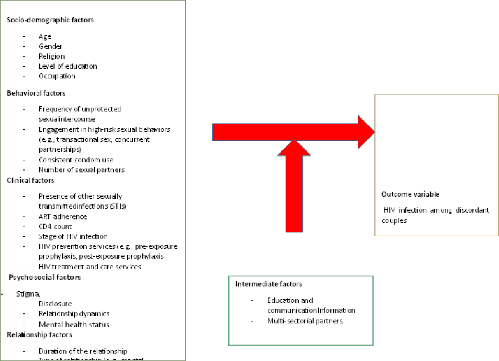
17
Figure 1:Conceptual framework on the prevalence of
HIV discordance and associated risk factors among couples receiving HIV test
(Source: The researcher, 2024)
18
CHAPTER3:METHODOLOGY
3.1 Studysetting
The study was conducted in Kibagabaga Hospital, located in
Gasabo District. Kibagabaga Hospital is a prominent healthcare facility
providing a wide range of medical services to the local population and is
well-regarded for its commitment to improving public health. The Hospital has a
comprehensive program for HIV testing and treatment, making it an ideal setting
for this research. Gasabo district, situated in Kigali, the capital city of
Rwanda, has a diverse population with varying socioeconomic backgrounds,
providing a rich context for investigating the prevalence of
3.2 Research design
This approach provided empirical evidence to inform targeted
interventions aimed at reducing HIV transmission among couples in the Hospital
setting.
3.3 Study population
According to Sparks & Joyner (2019), a population is the
total collection of elements about which we wish to make inferences. The target
population in this study was comprised of 96 discordant couples who attended
Kibagabaga Hospital of Gasabo District, during the period of 2020-2024.
19
3.4 Sample size
Records from Kibagabaga Hospital showed a total number of 696
discordant couples from 2020 to 2024. N
n =
1 + Ne2
Formula for determination of Sample Size, n (Yamane,
1967); Where: n= the sample size
N = the population size
e= the desired level of statistical significance (0.05)
Therefore.
|
n=
|
N
1+Ne2
|
696
|
=254
|
|
1+696(0.05)2
|
|
Hence, this study will recruit 254 discordant couples to
participate.
3.5 Sampling technique
All participants have been selected from Kibagabaga Hospital.
systematic random sampling was used to sample the
discordant couples who tested for HIV, and all of them had an equal chance to
participate in the study.
Inclusion criteria:
- Couples affected by HIV discordance: The
study included couples where one partner is HIV-positive (index case) and the
other is HIV-negative.
- Residence in Gasabo District: Participants
must reside within the Gasabo District to ensure the study's focus on this
specific urban setting.
- Willingness to participate: Couples who
expressed willingness to participate in the study through informed consent
processes.
20
- Age criteria: Depending on study
objectives, specific age ranges (e.g., 18-49 years) may be included to capture
relevant age-related dynamics.
Exclusion criteria:
- Non-consenting couples: Couples who do not
provide informed consent to participate in the study.
- Couples not meeting discordance criteria:
Couples where both partners are HIV-positive or both partners are
HIV-negative would be excluded.
- Residence outside Gasabo District: Couples
residing outside Gasabo District would not be included to maintain geographical
focus.
These criteria are essential for ensuring the study's
relevance and integrity, focusing on the specific population of interest and
enabling researchers to draw meaningful conclusions about HIV discordance
within the targeted urban context of Gasabo district.
3.8 Data Analysis
This analysis plan was structured to meticulously investigate
the impacts of socio-demographic, behavioral, clinical, psychosocial, and
relationship factors on HIV outcomes. The process started with rigorous data
cleaning to address missing data, outliers, and inconsistencies. Descriptive
analysis followed, providing a detailed understanding of the dataset through
frequency distributions, summary statistics, and visualizations of social
demographics variables. In addition, Bivariate analysis identified significant
associations between each variable and HIV status using chi-squared tests where
statistical significance was measured at p-value <0.05. The study culminated
in multivariate logistic regression models that assessed the combined effects
of significant predictors while adjusting for confounders. The study reported
adjusted odds Ratio, 95% CI, and p-value.
3.9 Ethical-considerations
A clearance letter turned into-received from the ethical
research Committee of the college of Rwanda faculty of Public fitness.
Permission become sought from the Gasabo district by way of providing the
clearance letter from the faculty to get records from Kibagabaga clinic.
informed consent become requested from all the research participants using an
informed consent form signed with the aid of each participant. individuals who
felt uncomfortable have been allowed to withdraw at any moment throughout the
records series system without any penalty. information
21
changed into treated with utmost confidentiality the use of
numbers as opposed to names and confined get entry to to data by
non-researchers.
CHAPTER 4: RESULTS
4.1. The sociodemographic characteristics
Table 1 illustrates the socio-demographic characteristics of a
population of 254 individuals, highlighting distinct trends across various
demographic markers. In gender distribution, males are predominantly
represented with 165 (65%) compared to females who account for 89 (35%). The
age group 26-35 years comprises the largest segment at 71 (28%), emphasizing a
younger adult population. Educationally, the highest completion is at the
university level with 71 (28%), showing a significant presence of higher
education within the group. Occupation-wise, salaried positions lead at 58
(22.8%), reflecting a substantial portion of the population in formal
employment. Religious affiliations are diverse, with Catholics being the most
prevalent at 69 (27.2%). (see table 1)
Table 1: Socio-demographic characteristics
(N=254)
|
Variable(s)
|
Number(n)
|
Percentage (%)
|
|
Gender
|
|
|
|
Female
|
89
|
35
|
|
Male
|
165
|
65
|
|
Age in years
|
|
|
|
18-25
|
68
|
26.8
|
|
26-35
|
71
|
28
|
|
36-45
|
52
|
20.5
|
|
>45
|
63
|
24.8
|
|
Education
|
|
|
|
A'level
|
56
|
22
|
|
O'level
|
57
|
22.4
|
|
Primary school
|
70
|
27.6
|
|
University level
|
71
|
28
|
|
Occupation
|
|
|
|
Business
|
41
|
16.1
|
|
Casual labor
|
44
|
17.3
|
|
Driver
|
36
|
14.2
|
|
Motorist
|
38
|
15
|
22
No occupation
|
37
|
14.6
|
|
Salaried
|
58
|
22.8
|
|
Religion
|
|
|
|
Adventist
|
43
|
16.9
|
|
Catholic
|
69
|
27.2
|
|
Muslim
|
47
|
18.5
|
|
Other
|
51
|
20.1
|
|
Protestant
|
44
|
17.3
|
HIV infection prevalence from 2020 up to 2024
Figure 2 shows the HIV Prevalence among discordant couples, in
2020 it was 18.1%, while in 2021 was 13.4%, in 2022 was 31.5%, in 2023 was
23.6% and in 2024 was 13.4%.
45
40
40
35 31.5
30
30
25 23 23.6
Frequency(n)
20 18.1 17 17 Percentage(%)
15 13.4 13.4
10
5
0
2020 2021 2022 2023 2024
Figure 2: shows HIV infection prevalence among
discordant couple
4.2. Bivariate analysis of socio-demographic
characteristics and HIV infection among discordant couples
The bivariate analysis of socio-demographic characteristics
and HIV infection among discordant couples highlights two significant
associations. First, age appears to play a critical role in infection rates,
particularly among those over 45 years, where 41 individuals (65.1%, p-value =
0.0052) tested positive, suggesting a higher vulnerability to HIV infection.
Secondly, occupation, specifically for
23
drivers, is associated with a markedly higher rate of HIV
positivity, with 25 drivers (69.4%, p-value = 0.0167) being infected. (See
table 2)
Table 2: shows the socio-demographic
characteristics and HIV infection among discordant
|
couples
|
|
|
|
|
|
HIV Status
|
|
|
Negative
|
Positive
|
|
Variable(s)
|
No(row%)
|
No(row%)
|
P-Value
|
|
Gender
|
|
|
0.895
|
|
Female
|
44(49.4)
|
45(50.6)
|
|
|
Male
|
83(50.3)
|
82(49.7)
|
|
|
Age in years
|
|
|
0.0052
|
|
18-25
|
37(54.4)
|
31(45.6)
|
|
|
26-35
|
40(56.3)
|
31(43.7)
|
|
|
36-45
|
28(53.8)
|
24(46.2)
|
|
|
>45
|
22(34.9)
|
41(65.1)
|
|
|
Education
|
|
|
0.547
|
|
A'level
|
25(44.6)
|
31(55.4)
|
|
|
O'level
|
26(45.6)
|
31(54.4)
|
|
|
Primary school
|
39(55.7)
|
31(44.3)
|
|
|
University level
|
37(52.1)
|
34(47.9)
|
|
|
Occupation
|
|
|
0.0167
|
|
Business
|
25(61)
|
16(39)
|
|
|
Casual labor
|
24(54.5)
|
20(45.5)
|
|
|
Driver
|
11(30.6)
|
25(69.4)
|
|
|
Motorist
|
19(50)
|
19(50)
|
|
|
No occupation
|
19(51.4)
|
18(48.6)
|
|
|
Salaried
|
29(50)
|
29(50)
|
|
|
Religion
|
|
|
0.254
|
24
Adventist
|
25(58.1)
|
18(41.9)
|
|
Catholic
|
30(43.5)
|
39(56.5)
|
|
Muslim
|
19(40.4)
|
28(59.6)
|
|
Other
|
28(54.9)
|
23(45.1)
|
|
Protestant
|
25(56.8)
|
19(43.2)
|
4.3. Primary characteristics and HIV infection among
discordant couples
Table 3 provides a detailed exploration of primary
characteristics and their correlation with HIV infection among discordant
couples, highlighting several significant associations. Notably, engaging in
transactional sex shows a marginally significant correlation with HIV
positivity, with 39 individuals (51.3%, p-value = 0.0471) being positive,
suggesting the potential risk associated with such behavior. A more pronounced
risk is observed among those with multiple sex partners, where those without
multiple partners exhibit a higher infection rate of 75 (57.3%, p-value =
0.017), underscoring the importance of limiting sexual partners in reducing HIV
transmission. Additionally, a diagnosis with STIs also correlates with a higher
HIV infection rate, with 77 positive cases (53.5%, p-value = 0.0205),
highlighting the critical link between STI management and HIV risk reduction.
Furthermore, relationship type emerges as a significant factor; individuals in
monogamous relationships have an unexpectedly higher rate of HIV infection, at
67 (55.4%, p-value = 0.0102), indicating that even monogamous setups among
discordant couples carry substantial transmission risks. (See Table 3)
Table 3:shows the primary characteristics and HIV
infection among discordant couples
|
|
HIV Status
|
|
|
Negative
|
Positive
|
|
Variable(s)
|
No(row%)
|
No(row%)
|
P-Value
|
|
Transactional Sex
|
|
|
0.0471
|
|
Always
|
37(48.7)
|
39(51.3)
|
|
|
Condom use
|
30(50.8)
|
29(49.2)
|
|
|
Never
|
29(44.6)
|
36(55.4)
|
|
|
Sometimes
|
31(57.4)
|
23(42.6)
|
|
|
Multiple Sex
|
|
|
0.017
|
25
Partners
|
|
|
|
|
No
|
56(42.7)
|
75(57.3)
|
|
|
Yes
|
71(57.7)
|
52(42.3)
|
|
|
Sex Under
|
|
|
|
|
Influence
|
|
|
0.706
|
|
No
|
68(51.1)
|
65(48.9)
|
|
|
Yes
|
59(48.8)
|
62(51.2)
|
|
|
Diagnosis with
|
|
|
|
|
STIs
|
|
|
0.0205
|
|
No
|
60(54.5)
|
50(45.5)
|
|
|
Yes
|
67(46.5)
|
77(53.5)
|
|
|
Attended PrEP and PEP
|
|
|
0.38
|
|
No
|
68(52.7)
|
61(47.3)
|
|
|
Yes
|
59(47.2)
|
66(52.8)
|
|
|
Access to HIV
|
|
|
|
|
Services
|
|
|
0.166
|
|
No
|
74(54)
|
63(46)
|
|
|
Yes
|
53(45.3)
|
64(54.7)
|
|
|
HIV-related
|
|
|
|
|
Stigma
|
|
|
0.802
|
|
No
|
64(49.2)
|
66(50.8)
|
|
|
Yes
|
63(50.8)
|
61(49.2)
|
|
|
HIV Status Communication
|
|
0.954
|
|
Not discussed at all
|
25(50)
|
25(50)
|
|
|
Open and frequent
|
30(54.5)
|
25(45.5)
|
|
|
Rarely discussed
|
27(49.1)
|
28(50.9)
|
|
|
Somewhat open
|
23(46.9)
|
26(53.1)
|
|
|
partner
|
22(48.9)
|
23(51.1)
|
|
|
Depression Due to HIV Status
|
|
0.98
|
|
Always
|
28(50.9)
|
27(49.1)
|
|
|
Never
|
33(50.8)
|
32(49.2)
|
|
|
Rarely
|
32(47.8)
|
35(52.2)
|
|
26
Sometimes Relationship
|
34(50.7)
|
33(49.3)
|
|
|
Length
|
|
|
0.765
|
|
1 to 2 years
|
32(51.6)
|
30(48.4)
|
|
|
6 months to 1 year
|
36(50.7)
|
35(49.3)
|
|
|
Less than 6 months
|
27(44.3)
|
34(55.7)
|
|
|
More than 2 years
|
32(53.3)
|
28(46.7)
|
|
|
Relationship Type
|
|
|
0.0102
|
|
Casual
|
73(54.9)
|
60(45.1)
|
|
|
Monogamous
|
54(44.6)
|
67(55.4)
|
|
|
Relationship Satisfaction
|
|
|
0.0523
|
|
Neutral
|
65(47.1)
|
73(52.9)
|
|
|
Very satisfied
|
62(53.4)
|
54(46.6)
|
|
4.4. Logistic regression of the associated risk
factors of HIV infection among the discordant couples
Table four presents a logistic regression analysis of hazard
factors for HIV infection among discordant couples, that specialize in adjusted
odds ratios (AOR) and their significance. significantly, people over forty five
years antique exhibit significantly higher odds of infection, with an AOR of
2.37 (95% CI: 1.10-five.12, p-price = 0.027), highlighting age as a essential
issue in HIV susceptibility. similarly, drivers face a markedly multiplied
danger, with an AOR of 4.seventy seven (ninety five% CI: 1.seventy
one-thirteen.31, p-price = zero.003), pointing to occupational risks that
contribute to HIV risks. moreover, having multiple sex partners drastically
elevates HIV contamination odds, with an AOR of 1.67 (95% CI: 1.31-2.88,
p-price = 0.016). (see table four)
27
Table 4: Logistic regression of the associated risk
factors of HIV infection among the discordant couples
|
HIV Outcome
|
COR (95%CI)
|
P-value
|
AOR (95%CI)
|
P-Value
|
|
Age in years
|
|
|
|
|
|
18-25
|
1.00
|
|
1.00
|
|
|
26-35
|
1.83(1.35,1.90)
|
0.018*
|
0.93(0.45,1.90)
|
0.85
|
|
36-45
|
1.12(0.47,2.31)
|
0.909
|
1.02(0.47,2.21)
|
0.949
|
|
>45
|
2.37(1.12,6.12)
|
0.033*
|
2.37(1.10,5.12)
|
0.027*
|
|
Occupation
|
|
|
|
|
|
Business
|
1.00
|
|
1.00
|
|
|
Casual labor
|
1.37(0.59,3.65)
|
0.299
|
1.47(0.59,3.65)
|
0.399
|
|
Driver
|
4.03(1.71,13.01)
|
0.013*
|
4.77(1.71,13.31)
|
0.003*
|
|
Motorist
|
2.22(0.82,5.42)
|
0.123
|
2.12(0.82,5.52)
|
0.12
|
|
No occupation
|
1.37(0.61,4.17)
|
0.357
|
1.57(0.61,4.07)
|
0.347
|
|
Salaried
|
2.63(0.85,5.76)
|
0.179
|
2.03(0.85,4.86)
|
0.109
|
|
Transactional sex
|
|
|
|
|
|
Never
|
1.35(0.61,2.55)
|
0.635
|
1.25(0.61,2.56)
|
0.535
|
|
Sometimes
|
1.68(1.32,1.83)
|
0.0314*
|
0.68(0.32,1.43)
|
0.314
|
|
Condom use
|
1.02(0.49,2.11)
|
0.945
|
1.02(0.49,2.11)
|
0.945
|
|
Always
|
1.00
|
|
1.00
|
|
|
Having multiple sex partners
|
|
|
|
|
|
Yes
|
1.52(1.31,1.88)
|
0.006
|
1.67(1.31,2.88)
|
0.016
|
|
No
|
1.00
|
|
1.00
|
|
|
Diagnosis with STIs
|
|
|
|
|
|
Yes
|
0.49(0.06,0.59)
|
0.0148
|
1.49(0.86,2.59)
|
0.148
|
|
No
|
1.00
|
|
1.00
|
|
|
Relationship type
|
|
|
|
|
|
Monogamous
|
1.57(1.11,2.69)
|
0.009
|
1.57(0.91,2.69)
|
0.098
|
|
Casual
|
1.00
|
|
1.00
|
|
Relationship satisfaction
Very satisfied 1.72(1.42,1.62) 0.022
0.72(0.42,1.22) 0.224
Neutral 1.00 1.00
28
COR: Crude odds Ratio, AOR:
Adjusted Odds ratio
29
CHAPTER 5. DISCUSSION
This take a look at aimed to evaluate the superiority of HIV
contamination amongst discordant couples who examined HIV repute at Kibagabaga
health facility over a length from 2020 to 2024. The statistics discovered a
noteworthy increase in the share of HIV-positive individuals many of the
couples, highlighting a critical shift within the HIV contamination dynamics
inside this population. further analysis confirmed that the following factors
are key predictors of HIV infection amongst discordant couples: multiple sexual
partners, age of greater than forty five years, and driver profession.
have a look at findings showed that having multiple sexual
partners become a ability hazard aspect for HIV infection among discordant
couples. these findings are similar with different research like the examine
conducted. studies which include Dunkle et al. (2008) and the partners in
Prevention HSV/HIV Transmission have a look at team (2010) display that more
than one partnerships make bigger the risk of HIV transmission thru multiplied
publicity possibilities, which includes to drug-resistant virus traces. those
findings are regular across specific regions, including sub-Saharan Africa,
where a meta-evaluation by means of Mah and Halperin (2010) underscores the
correlation among more than one concurrent partnerships and better HIV
infection costs. moreover, psychological and social dynamics additionally play
a critical function, as visible in research with the aid of Chai et al. (2014)
in China, which factors to the want for culturally tailored interventions to
deal with those elements effectively. Prevention techniques highlighted by
Allen and Meinzen-Derr (2000) emphasize the importance of lowering the range of
sexual partners and continually the usage of condoms to mitigate transmission
risks among discordant couples.
Our findings found out that couples with ages extra than forty
five years had been are threat of HIV infection. but, these consequences and
constant with different findings. The findings that couples over the age of 45
are at risk of HIV contamination might first of all seem unexpected however are
well-supported by using the literature, reflecting a broader fashion in public
fitness knowledge that HIV chance is not restrained to younger individuals by
myself. research inclusive of that conducted by Brooks et al. (2016) highlights
that older adults have interaction in hazard behaviors similar to younger
populations however are regularly neglected in preventive interventions.
organic and behavioral adjustments with age, which include decreased condom use
and changes in sexual characteristic, make a contribution to improved threat.
furthermore, socio-
30
economic elements may also lead older adults to form
relationships with more youthful partners, probably altering risk dynamics.
research by way of Schick et al. (2014) and Zablotska et al. (2018)
additionally emphasize that older adults are much less in all likelihood to be
tested for HIV because of healthcare vendors' assumptions approximately their
sexual pastime, that may put off diagnosis and remedy. This convergence of
things underscores the want for healthcare techniques that emphasize education,
testing, and prevention tailor-made to all age corporations, as echoed in
comparative research like the ones with the aid of Skolnik et al. (2019),
reinforcing the significance of addressing HIV danger across various
populations and age brackets.
have a look at findings showed that couples wherein one of
them became a driving force showed a more risk of HIV infection and this is
steady with other research. The commentary that couples in which one associate
is a driving force are at an expanded hazard of HIV infection is supported by
severa research that check out the precise occupational dangers associated with
mobile jobs. for example, drivers regularly spend long periods away from
domestic, that can lead to engagement in high-danger sexual behaviors, together
with interactions with commercial sex workers, as mentioned in research like
those through Delany-Moretlwe et al. (2010). This transient lifestyle also can
result in social isolation, further increasing the probability of seeking
companionship in dangerous contexts. moreover, Lichtenstein (2015) highlights
that truck drivers are specially vulnerable due to their common exposure to
environments wherein casual sex is greater commonplace. Comparative studies
throughout regions, which includes the examine by means of Ramjee and Gouws
(2017), confirms higher prices of HIV amongst drivers, emphasizing the want for
focused intervention techniques
5.1 Implications of the Study
The results of those findings are considerable for HIV control
and prevention techniques. The increasing prevalence of HIV amongst discordant
couples highlights the urgency of enhancing preventive measures, inclusive of
enhancing get entry to to PrEP and PEP, promoting regular testing, and
addressing behavioral dangers like multiple sexual partnerships. furthermore,
the associations between socio-demographics and behavioral elements and HIV
danger recommend the want for included care approaches that combine behavioral,
and social assist to mitigate the threat of transmission and improve average
health effects for discordant couples.
5.2 Strengths and Limitations
31
A key energy of this study is its complete analysis of a
couple of factors influencing HIV threat, presenting a holistic view of the
epidemic among discordant couples. using sturdy statistical methods to perceive
vast institutions adds to the reliability of the findings. but, the examine
also has obstacles. The observe's observational nature restricts the ability to
deduce causality, and the capacity for keep in mind bias in self-stated
behavioral statistics can also have encouraged a number of the findings.
moreover, the look at's consciousness on a unmarried medical institution may
restrict the generalizability of the consequences to different settings.
32
CHAPTER 6. CONCLUSION AND RECOMMENDATIONS
6.1 Conclusion
This study investigated the prevalence of HIV infections among
couples tested at Kibagabaga Hospital between 2020 and 2024, revealing a
significant increase in HIV-positive cases over time. The rise in infections
among HIV-discordant couples underscores the urgent need for improved
preventive measures and ongoing monitoring. The findings in this study align
with existing literature that highlights the importance of regular HIV testing,
adherence to antiretroviral therapy, and consistent use of preventive
strategies such as condoms and pre-exposure prophylaxis (PrEP).
Socio-demographic and behavioral factors, including age, education, and sexual
practices, significantly influence HIV risk, with notable implications for
targeted interventions.
6.2 Recommendations
V' Develop and implement targeted education and awareness
programs specifically for individuals over 45 years and drivers.
V' Focus on the risks associated with multiple sexual partners
and the benefits of regular HIV testing.
V' Collaborate with transportation companies and unions to
introduce regular HIV prevention workshops
V' Provide free or subsidized HIV testing for drivers during
routine health and safety training sessions.
33
REFERENCES
Abbasian, L., Ashtiani, M. F., Najafi, Z., &
Seyedalinaghi, S. (2019). Clinical Outcome of HIV Infected Patients Receiving
Antiretroviral Therapy with Immunologic-Virologic Discordance (2012-2016).
JOURNAL OF INTERNATIONAL TRANSLATIONAL MEDICINE, 7(1).
Aboubacar Ahidan, M. R., Buende, S., Osei, L., Hcini, N.,
& Elenga, N. (2023). Sociodemographic characteristics of children born to
HIV-infected mothers in Western French Guiana. Journal of Infection and
Public Health, 16(6).
https://doi.org/10.1016/j.jiph.2023.03.027
Aghaei, A., Mohraz, M., & Shamshirband, S. (2020). Effects
of media, interpersonal communication and religious attitudes on HIV-related
stigma in Tehran, Iran. Informatics in Medicine Unlocked, 18.
https://doi.org/10.1016/j.imu.2020.100291
Akani, C., Erhabor, O., Opurum, H., Ejele, O., & Nwauche,
C. (2006). HIV sero-discordance among Nigerian couples: challenges and
controversies. Nigerian Medical Practitioner, 48(3).
https://doi.org/10.4314/nmp.v48i3.28766
Alang, S., & McAlpine, D. (2020). Treatment Modalities and
Perceived Effectiveness of Treatment Among Adults With Depression. Health
Services Insights, 13.
https://doi.org/10.1177/1178632920918288
Albarracín, D., Fishbein, M., Johnson, B. T., &
Muellerleile, P. A. (2001). Theories of reasoned action and planned behavior as
models of condom use: A meta-analysis. Psychological Bulletin,
127(1).
https://doi.org/10.1037/0033-2909.127.1.142
Bandura, A. (1994). Social Cognitive Theory and Exercise
of Control over HIV Infection.
https://doi.org/10.1007/978-1-4899-1193-3_3
Bandura, A. (1998). Health promotion from the perspective of
social cognitive theory. Psychology and Health, 13(4).
https://doi.org/10.1080/08870449808407422
Bunnell, R. E., Nassozi, J., Marum, E., Mubangizi, J.,
Malamba, S., Dillon, B., Kalule, J., Bahizi, J., Musoke, N., & Mermin, J.
H. (2005). Living with discordance: Knowledge, challenges, and prevention
strategies of HIV-discordant couples in Uganda. AIDS Care -
Psychological
and Socio-Medical Aspects of AIDS/HIV,
17(8).
https://doi.org/10.1080/09540120500100718
34
Buonomo, E., Germano, P., Moramarco, S., Rossi, R., Malizia,
A., Scarcella, P., Orlando, S., Guidotti, G., Nielsen-Saines, K., Tembo, D.,
Marazzi, M. C., & Palombi, L. (2020). Early assessment of weight velocity
can support frontline health workers in predicting malnutrition in HIV-exposed
infants: Preliminary results from a DREAM cohort in Malawi. Minerva
Pediatrica, 72(1).
https://doi.org/10.23736/S0026-4946.19.05417-3
Champredon, D., Bellan, S., & Dushoff, J. (2013). HIV
sexual transmission is predominantly driven by single individuals rather than
discordant couples: A model-based approach. PLoS ONE, 8(12).
https://doi.org/10.1371/journal.pone.0082906
Darabi, F., Maheri, M., & Shadmani, M. N. (2023). The
Effect of Educational Intervention Based on the Health Belief Model on
Promoting Perceived Self-efficacy to Prevent HIV/AIDS Among the High School
Students. Journal of Education and Community Health, 10(1).
https://doi.org/10.34172/jech.2023.1991
Dzewaltowski, D. A., Noble, J. M., & Shaw, J. M. (2016).
Physical Activity Participation: Social Cognitive Theory versus the Theories of
Reasoned Action and Planned Behavior. Journal of Sport and Exercise
Psychology, 12(4).
https://doi.org/10.1123/jsep.12.4.388
Evans, C., Chasekwa, B., Ntozini, R., Majo, F. D., Mutasa, K.,
Tavengwa, N., Mutasa, B., Mbuya, M. N. N., Smith, L. E., Stoltzfus, R. J.,
Moulton, L. H., Humphrey, J. H., & Prendergast, A. J. (2021). Mortality,
Human Immunodeficiency Virus (HIV) Transmission, and Growth in Children Exposed
to HIV in Rural Zimbabwe. Clinical Infectious Diseases,
72(4).
https://doi.org/10.1093/cid/ciaa076
Eze, I. O., Okeudo, C., Ezem, B. U., Ukoh, C. U., Nzeribe, E.
A., Nwagha, U., Njoku, T., Uzoma, O., & Duke, O. A. (2018). The prevalence
and determinants of female serodiscordance among HIV positive pregnant women
attending PMTCT clinic in Owerri, Imo state, Nigeria. International Journal
of Reproduction, Contraception, Obstetrics and Gynecology, 8(1).
https://doi.org/10.18203/2320-1770.ijrcog20185405
FA, M., AN, O., AN, O., VC, P., VC, P., T, A., T, A., J, M., J,
M., AS, S., AS, S., AI, Z., & AI,
Z. (2018). HIV Status in Sero-Discordant Couples: Prevalence
and Pattern among Pregnant Women in Plateau State, Nigeria. Journal of
Clinical Research In HIV AIDS And Prevention.
https://doi.org/10.14302/issn.2324-7339.jcrhap-18-2236
Fawzy, A., Arpadi, S., Kankasa, C., Sinkala, M., Mwiya, M.,
Thea, D. M., Aldrovandi, G. M., & Kuhn, L. (2011). Early weaning increases
diarrhea morbidity and mortality among
35
uninfected children born to 11IV-infected mothers in Zambia.
Journal of Infectious Diseases, 203(9).
https://doi.org/10.1093/infdis/jir019
Friedman, S. R., Bolyard, M., Khan, M., Maslow, C., Sandoval,
M., Mateu-Gelabert, P., Krauss, B., & Aral, S. O. (2008). Group sex events
and HIV/STI risk in an urban network. Journal of
Acquired Immune Deficiency Syndromes,
49(4).
https://doi.org/10.1097/QAI.0b013e3181893f31
Getachew, B., Solomon, S., Ramet, B. T., Mezgebu, T., Ewnetu,
D. B., & Macdonald, N. (2021). Feeding experiences of hiv-exposed preterm
infants among mothers living with hiv in addis ababa, ethiopia: A qualitative
study. HIV/AIDS - Research and Palliative Care, 13.
https://doi.org/10.2147/HIV.S333537
Geter, A., Herron, A. R., & Sutton, M. Y. (2018).
HIV-Related Stigma by Healthcare Providers in the United States: A Systematic
Review. In AIDS Patient Care and STDs (Vol. 32, Issue 10).
https://doi.org/10.1089/apc.2018.0114
Golin, C. E., Barkley, B. G., Biddell, C., Wohl, D. A., &
Rosen, D. L. (2018). Great Expectations: HIV Risk Behaviors and Misperceptions
of Low HIV Risk among Incarcerated Men. AIDS and Behavior,
22(6).
https://doi.org/10.1007/s10461-017-1748-z
Islam, K. F., Awal, A., Mazumder, H., Munni, U. R., Majumder,
K., Afroz, K., Tabassum, M. N., & Hossain, M. M. (2023). Social cognitive
theory-based health promotion in primary care practice: A scoping review. In
Heliyon (Vol. 9, Issue 4).
https://doi.org/10.1016/j.heliyon.2023.e14889
Kitessa, D., Rulisa, S., Ntasumbumuyange, D., Aimable, M.,
Pritchett, N., & Ghebre, R. (2019). Immediate postpartum family planning
preferences among couples in Rwanda. Rwanda Medical Journal,
76(4).
Li, X., Lin, D., Wang, B., Du, H., Tain, C. C., & Stanton,
B. (2014). Efficacy of theory-based hiv behavioral prevention among
rural-to-urban migrants in china: A randomized controlled trial. AIDS
Education and Prevention, 26(4).
https://doi.org/10.1521/aeap.2014.26.4.296
Lingappa, J. R., Lambdin, B., Bukusi, E. A., Ngure, K.,
Kavuma, L., Inambao, M., Kanweka, W., Allen, S., Kiarie, J. N., Makhema, J.,
Were, E., Manongi, R., Coetzee, D., de Bruyn, G., Delany-Moretlwe, S., Magaret,
A., Mugo, N., Mujugira, A., Ndase, P., ... Rees, 11. (2008). Regional
differences in prevalence of HIV-1 discordance in Africa and enrollment of
HIV-1
36
discordant couples into an HIV-1 prevention trial. PLoS
ONE, 3(1).
https://doi.org/10.1371/journal.pone.0001411
Mahyarni, M. (2013). Theory Of Reasoned Action Dan Theory Of
Planned Behavior. Jurnal EL-RIVASAH, 4(1).
Manhart, L. E., Aral, S. O., Holmes, K. K., & Foxman, B.
(2002). Sex partner concurrency: measurement, prevalence, and correlates among
urban 18-39-year-olds. Sexually Transmitted Diseases,
29(3).
Manu, F. A., & Sriram, Y. (1999). The health belief model
and AIDS-preventive behavior in a ghana student population: An exploratory
investigation. Journal of International Consumer Marketing,
11(2).
https://doi.org/10.1300/J046v11n02_04
Matahari, R., & Utami, F. P. (2019). Understanding
HIV/AIDS perception using health belief model of female sex workers with
HIV/AIDS. Indian Journal of Public Health Research and Development,
10(3).
https://doi.org/10.5958/0976-5506.2019.00628.4
Mehra, B., Bhalla, P., Rawat, D., & Kishore, J. (2015). A
study of HIV-concordant and - discordant couples attending voluntary
counselling and testing services at a tertiary care center in North India.
Indian Journal of Public Health, 59(4).
https://doi.org/10.4103/0019-557x.169664
Merlin, J. S., Young, S. R., Johnson, M. O., Saag, M., Demonte,
W., Kerns, R., Bair, M. J.,
Kertesz, S., Turan, J. M., Kilgore, M., Clay, O. J., Pekmezi,
D., & Davies, S. (2018). Intervention Mapping to develop a Social Cognitive
Theory-based intervention for chronic pain tailored to individuals with HIV.
Contemporary Clinical Trials Communications, 10.
https://doi.org/10.1016/j.conctc.2018.02.004
Mwihaki, L., Irungu, E., Mwathi, J., Ngure, K., & Mugo, N.
(2016). Prevalence and correlates of outside sexual partnerships in HIV-1
serodiscordant couples enrolled in a clinical trial in Thika Kenya. AIDS
Research and Human Retroviruses, 32.
Nasab, A. F., & Majzobi, M. M. (2022). Comparative
Assessment of the Mental Health Status of HIV-Positive and HIV-Negative
Intravenous Drug Users. Journal of Education and Community Health,
9(2).
https://doi.org/10.34172/jech.2022.15
Natchu, U. C. M., Liu, E., Duggan, C., Msamanga, G., Peterson,
K., Aboud, S., Spiegelman, D., & Fawzi, W. W. (2012). Exclusive
breastfeeding reduces risk of mortality in infants up to 6
37
mo of age born to HIV-positive Tanzanian women. American
Journal of Clinical Nutrition, 96(5).
https://doi.org/10.3945/ajcn.111.024356
Ngilangwa, D. P., Ochako, R., Mboya, B. A., Noronha, R. H.,
& Mgomella, G. S. (2015). Prevalence and predictors of hiv sero-discordance
among cohabiting couples tested in
Northern Tanzania. Pan African Medical Journal,
22.
https://doi.org/10.11604/pamj.2015.22.275.5961
Nsanzimana, S. (2019). Rwanda Population-based HIV Impact
Assessment (RPHIA) - Key findings.
https://www.rbc.gov.rw/publichealthbulletin/articles/read/33/Rwanda%20Population-based%20HIV%20Impact%20Assessment%20(RPHIA)%20-%20%20Key%20findings
Olaleye, A., Owhonda, G., & Sibor, L. (2016). Prevalence
of HIV sero-discordance among pregnant women and their partners in rivers
state, Nigeria. AIDS Research and Human Retroviruses,
32(Supplement 1).
Pullum, T., & Staveteig, S. (2013). HIV status and
cohabitation in sub-Saharan Africa . DHS Analytical Studies No. 35 ,
December.
Sebastiani, G., Milic, J., Gioe, C., Al Hinai, A. S., Cervo,
A., Lebouche, B., Deschenes, M., Cascio, A., Mazzola, G., & Guaraldi, G.
(2022). Diagnosis of liver fibrosis in ageing patients with HIV at risk for
non-alcoholic fatty liver disease in Italy and Canada: assessment of a two-tier
pathway. The Lancet. HIV, 9.
https://doi.org/10.1016/S2352-
3018(22)00069-8
Simidele, O., Silas, O., & Iheanacho, N. (2015). Review
and Follow up Findings on HIV Serodiscordance among Couples in Benue State
Nigeria. British Microbiology Research Journal, 5(2).
https://doi.org/10.9734/bmrj/2015/11863
Singh, S. K., & Siddhanta, A. (2023). Whether HIV
Discordance Among Couples Is Getting Altered Due to the Changing Discourseof
the HIV Epidemic in India? Evidence fromTwo Rounds of National Family Health
Survey. Journal of Health Management, 25(2).
https://doi.org/10.1177/09720634231175577
Sparks, C. S., & Joyner, K. (2019). Population Research
Briefs in Population Research and Policy Review. In Population Research and
Policy Review (Vol. 38, Issue 2).
https://doi.org/10.1007/s11113-019-09522-5
38
Tadesse, M. (2014a). Assessment of HIV discordance and
associated risk factors among couples receiving HIV test in Dilla, Ethiopia.
BMC Research Notes, 7(1).
https://doi.org/10.1186/1756-0500-7-893
Tadesse, M. (2014b). Assessment of HIV discordance and
associated risk factors among couples receiving HIV test in Dilla, Ethiopia.
BMC Research Notes, 7(1).
https://doi.org/10.1186/1756-0500-7-893
Taherdoost, H. (2020). Different Types of Data Analysis; Data
Analysis Methods and Techniques in Research Projects. International Journal
of Academic Research in Management (IJARM), 9(1).
Tam, V., Cuong, D. D., Alfven, T., Phuc, H. D., Chuc, N. T.
K., Hoa, N. P., Diwan, V., & Larsson, M. (2016). HIV sero-discordance among
married HIV patients initiating anti-retroviral therapy in northern Vietnam.
AIDS Research and Therapy, 13(1).
https://doi.org/10.1186/s12981-016-0124-9
Temam, G., & Ali, A. (2012). Prevalence of HIV and
discordant rate and their associated factors among premarital voluntary
counseling and testing (VCT) clients in Addis Ababa public VCT centers, Addis
Ababa, Ethiopia. Ethiopian Journal of Health Development,
26(3).
Thompson, O., Ipadeola, O., & Makinde, O. N. (2013).
Knowledge, Perception and Acceptance of Couple HIV Counselling and Testing in a
Rural Community in Nigeria. Public Health Research, 3(4).
Torti, C., Quiros-Roldan, E., Scudeller, L., Lo Caputo, S.,
Tomasoni, L., Castelli, F., Poggio, A., Delle Foglie, P., Chirianni, A.,
Sighinolfi, L., Mazzotta, F., Carosi, G., Toti, M., Donati, E., Alberici, F.,
Sisti, M., Cadeo, G., Vangi, D., Chirianni, A., ... Tinelli, C. (2003).
Characterization of viro-immunological responses in a closely followed cohort
of heavily pretreated patients: Evidence from the GenPheRex Study. HIV
Medicine, 4(3).
https://doi.org/10.1046/j.1468-1293.2003.00154.x
Tournoud, M., Ecochard, R., Kuhn, L., & Coutsoudis, A.
(2008). Diversity of risk of mother-to-child HIV-1 transmission according to
feeding practices, CD4 cell count, and haemoglobin concentration in a South
African cohort. Tropical Medicine and International Health,
13(3).
https://doi.org/10.1111/j.1365-3156.2008.02004.x
Umeobieri, A. K., Gyang, H. J., & Aniwada, E. C. (2022).
Prevalence and Factors Associated with HIV Sero-Discordance among In-Union HIV
Patients Receiving Care in a Private Health Facility in Jos, North Central,
Nigeria. West African Journal of Medicine, 39(4).
Vakili, M. M., Hidarnia, A. R., Niknami, S., Mousavinasab, N.,
Validity, C., & Model, H. B. (2012). Development and Psychometrics of
Health Belief Model Instrument about HIV/AIDS. Zahedan Journal of Research
in Medical Sciences.
W. LaMorte MD, PhD, MPH, W. (2019). The social cognitive
theory. In Boston University School of Public Health (Vol. 12, Issue
2).
Waruiru, W., Mbithi, A., Waruru, A., Galbraith, J., Kellogg,
T. A., Epperson, S., Ng'ang'a, A., Mwanyumba, S., Kimondo, L., & Kim, A. A.
(2014). Factors Associated With HIV Discordance Among Couples in Kenya: Results
From a Population Survey. Topics in Antiviral Medicine, 22
(e-1).
Were, W. A., Mermin, J. H., Wamai, N., Awor, A. C., Bechange,
S., Moss, S., Solberg, P., Downing, R. G., Coutinho, A., & Bunnell, R. E.
(2006). Undiagnosed HIV infection and couple HIV discordance among household
members of HIV-infected people receiving antiretroviral therapy in Uganda.
Journal of Acquired Immune Deficiency Syndromes, 43(1).
https://doi.org/10.1097/01.qai.0000225021.81384.28
Willcox, M. L., Mubangizi, V., Natukunda, S., Owokuhaisa, J.,
Nahabwe, H., Nakaggwa, F., Laughton, M., Chambers, I., Coates, S., King, E.,
Fall, E., Muller, I., Goodhart, C., & Graffy, J. (2021). Couples'
decision-making on post-partum family planning and antenatal counselling in
Uganda: A qualitative study. PLoS ONE, 16(5 May).
https://doi.org/10.1371/journal.pone.0251190
Yassin, Z., Erasmus, C., & Frantz, J. (2021). A model to
understand HIV-related stigma and the psychosocial well-being of children
orphaned by AIDS: a theory generative approach. Sahara J,
18(1).
https://doi.org/10.1080/17290376.2021.1989023
Zerdali, E., Mete, B., Aydýn, Ô. A.,
Gündüz, A., Nakir, . Y., Bolukçu, S., Karaosmanoðlu, H.
K., Sevgi, D. Y., Koç, M. M., & Tabak, F. (2023). Factors
Influencing HIV Infection in Children Born to HIV-Infected Mothers in Turkey.
Balkan Medical Journal, 40(5).
https://doi.org/10.4274/balkanmedj.galenos.2023.2023-3-12
39
Dunkle, K. et al. (2008). "Transmission of HIV within
heterosexual relationships: a multi-level
analysis of couple relationships from the Rakai, Uganda." AIDS
Care.
Partners in Prevention HSV/HIV Transmission Study Team. (2010).
"Risk factors for HIV-1 transmission in HIV-1 discordant couples." Journal of
Acquired Immune Deficiency Syndromes.
Mah, T.L., Halperin, D.T. (2010). "Concurrent sexual partnerships
and the HIV epidemics in Africa: evidence to move forward." AIDS and
Behavior.
Chai, J. et al. (2014). "Social and psychological factors
affecting HIV preventive behaviors among discordant couples in Henan province,
China." Culture, Health & Sexuality.
40
Allen, S., Meinzen-Derr, J. (2000). "HIV Risk Reduction for
Discordant Couples." AIDS Care.
41
Appendix 1. Ethical clearance
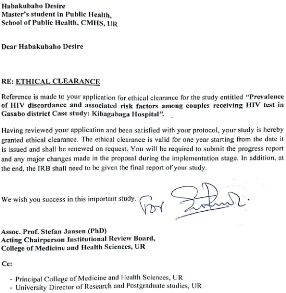

42
Appendix 3. Research authorization letter
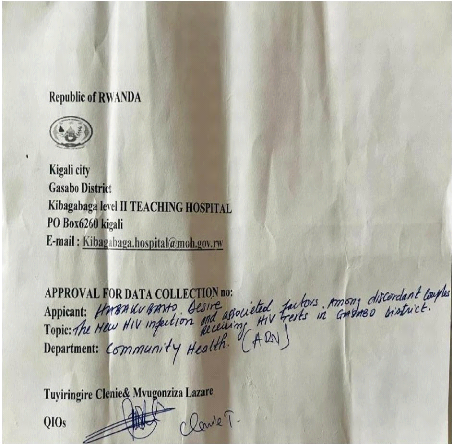
|
|