|
THE PROVISION OF NEST OF THE MALACHITE KINGFISHER (ALCEDO
CRISTATA): EVOLUTION OR CIRCUMSTANCE?
Kisasa Kafutshi Robert and Libois
Roland
University of
Liege
Unity of Zoogeographic
research
27, Rectorat Street,
B.22
4000 Liege/
Belgium.
Mail:
bob_kisasa@yahoo.fr

The coloniality in the birds touches approximately 13% of the
described species. The colonial reproduction can generate costs and benefit
related to exploitation of the resources (research in group, information
exchange, competition for food), l' access to the reproductive partner (more
important choice, competition between potential partners), proximity of the
individuals (cannibalism, transmission of parasites) and predation.
The colonial reproduction constitutes for predatory
concentration important of easy preys to be located.
Fig.1. Chicken of Malachite Kingfisher(Nine days of birth)
This can thus induce a pressure of more important predation.
Some predatory can even specialize. However the coloniality makes it possible
to reduce the individual risks by passive avoidances (effect of excess) and by
an earlier detection of the predator. The coloniality could even allow
exchanges; information concerning the predatory ones, which would generate more
effective collective defenses.
Among the birds having a colonial reproduction it is for which
the coloniality is not systematic. It is thus, in this case, possible to
measure the impact of the coloniality by comparing the colonial individuals
with those remained solitary. Wouldn't this be also the case of the Malachite
Kingfisher (Alcedo cristata) famous recluse and exceptionally semi
colonial in the area of Kinshasa?
Wouldn't the observations more finicked on several sites of
the area of Kinshasa and besides be it not also interesting to include the real
structure of the Malachite Kingfisher crested considered territorial and
solitary? Insufficiency of information on the species or a particular case of
occupation of site of nesting, about thirty burrows is indexed on an artificial
cliff along the ponds in full concession. The provision of these burrows seems
to be characteristic of the colonial species. These nests either occupied, or
abandoned but are concentrated in this forest concession around the five ponds
as the diagram indicates it below:
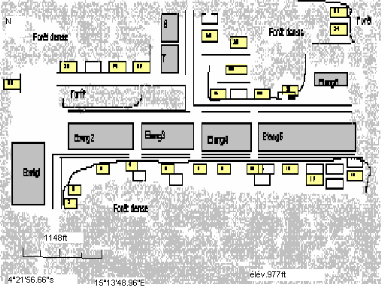
Fig.2. Nests of Malachite Kingfisher in forest concession of
Nda-Gye (R. Kisasa, 2008)
Legend
x
Nests occupied
Nests abandoned.
The forest of Nda-Gye is a concession of approximately
500hectares located at 977ft of altitude (S 04° 21' 56.66" and E 15°
13' 48.96") in the commune of Ngaliema (area of Kinshasa) The fauna of this
site is made up small mammals, reptiles (snakes, lizards and tortoises),
batrachians (frog), much of insects (coleopters, orthopters, odonates) and the
single fish raised in its ponds is Tilapia (Oreochromis niloticus).
The insects and this fish are preys the most consumed by the Malachite
Kingfisher. The movements of go and come from the adults towards these various
nests and the balls at the entry of nests constitute good indicators of nesting
of the birds in the site.
With the Monastery of Mount-Ngafula (with more than 9,61 km of
the concession of Nda-Gye), is an adjacent concession with the savannas cleared
and arranged for the cultures. However, there are sand pits which create slopes
and ravines offering of the artificial banks favourable with the establishment
of the burrows of the fishing martins. The nests were observed with 328m d'
alt, S 04° 25' 06,3' ' ; E 15° 17' 54,8'' On the slope of 15 m height
and 20 m broad, ten the distant nests one of the other of approximately 1,5 m
were explored in 2005. The site knows a strong anthropic pressure (extraction
of sand), all these nests were destroyed.
In Bombo-Lumene (one of the reserves and fields of hunting for
the Est of Kinshasa) and in Kimwenza (always in the same area) the nests are
insulated and rare.
The studies on the behaviour of the species of the kind showed
that the quality of the site has a considerable impact on the site of nests.
The Kingfisher prefers and nests at places calm and rich in preys. But then,
the real impact of this bird on the site remains still ignored. It is of this
fact of suspecting competitor undesirable for fish by the pisciculturists who
drive out them and kill. If it proves that this species is colonial, we
estimate that the thorough studies deserve to be undertaken to include the
period of formation of colonies, the advantages of this evolution towards the
coloniality and the real impact of installation of broods on the ichtyofauna of
the site. The advantages or the disadvantages related to the passage of the
solitary life (very frequent) to the coloniality (rare) can be highlighted by
the follow-up of the broods isolated (case of Bombo-Lumene, Kimwenza and
sometimes Monastery) with those from natural symphonies.
|