Conclusion
En regard de ce qui précède, la présente
étude a porté sur le match de football et réponses des
cellules immunitaires et de la protéine C- réactive chez les
étudiants actifs réhydratés en milieu chaud et humide.
Pour y parvenir, nous avons montré les variations induites par le match
de football sur les cellules immunitaires et de la CRP chez les
étudiants actifs de l'ISEPS.
La présente étude a été
réalisée sur la base de l'hypothèse principale suivante :
le match de football induit les variations des cellules immunitaires et de la
protéine C-réactive chez les étudiants actifs
réhydraté en milieu chaud et humide.
Les résultats de notre étude ont
montré :
- Des variations significatives de leucocytes, neutrophiles et
éosinophiles enregistrées avant effort, après et 2h
après effort ont été observé chez les sujets du
groupe réhydraté (GR) et du groupe non réhydraté
(GNR), alors que les lymphocytes et les monocytes ont significativement
varié que chez les sujets GR ;
- Une augmentation significative des valeurs moyennes de
leucocytes, neutrophiles et éosinophiles enregistrées
après effort par rapport à celles obtenues avant effort a
été observée chez les sujets GR et GNR ;
- Une augmentation significative des valeurs moyennes de
leucocytes, neutrophiles et éosinophiles enregistrées 2h
après effort par rapport à celles obtenues avant effort a
été également observée chez les sujets GR et
GNR ;
- Une diminution significative post effort de la CRP a
été observée chez les sujets GNR.
Dans cette étude, le match de football a fortement
influencél'expression des cellules immunitaires et de la CRP, vue ces
résultats, notre hypothèse a été validé.
PERSPECTIVES
Au regard de nos résultats, nous estimons que
l'objectif que nous nous sommes fixés préalablement se sont
révélés atteints. Dès lors nous espérons que
cette étude contribuera à une bonne imprégnation d'un
Match de football et réponses des cellules immunitaires et de la
protéine C- réactive chez les étudiants actifs
réhydratés en milieu chaud et humide et pourrait aussi
être considérée comme un document non négligeable
pour les chercheurs futurs.
Ainsi, les perspectives de cette étude sont les
suivantes :
- Réaliser la même étude en prenant un
échantillon plus grand ;
- Réaliser la même étude en prenant comme
échantillon les équipes de football de niveau national et
international, les marathoniens, semi-marathoniens ;
- Réaliser la même étude mais en testant
d'autres paramètres tel que la testostérone, l'interleukine-6,
l'interféron gamma, ...
Références Bibliographiques
1. Ablij H. (2002). C-reactiveprotein: history and revival.
Eur. J. Intern. Med. 13(7):412-22.
2. Adams J.D., Sekiguchi Y., Seal A., et al. (2017).
Dehydration impairs exercise performance independent of thirst perception:
ablindedstudy. Med Sci Sports Exerc. 49:833.
doi: 10.1249/01.mss.0000519236.20188.7b.
3. Ahmed Sheriff, Stefan Kayser, Patrizia
Brunner, Birgit Vogt. (2021). C-ReactiveProtein Triggers CellDeath in
IschemicCells. Immunol avant. 2021 ; 12 : 630430.
doi: 10.3389/fimmu.2021.630430
4. Anderson L., Naughton R., Close G. L., et al. (2017). Daily
distribution of macronutrientintakes of professional soccer playersfrom the
English Premier League. International Journal of Sport Nutrition and
ExerciseMetabolism . 27(6):491-498. doi: 10.1123/ijsnem.2016-0265.
5. Baker L.B., Barnes K.A., Anderson M.L., Passe D.H., Stofan
J.R. (2016). Normative data for regional sweat sodium concentration and
whole-body sweating rate in athletes. J. Sports Sci. 34:358-368.
doi: 10.1080/02640414.2015.1055291
6. Bangsbo J. (1994). Fitness training in football: a
scientificapproch. Bagsvaerd, Denmark: HO+Storm; p. 1-336.
7. Barnes KA, Anderson ML, Stofan JR, Dalrymple KJ, Reimel AJ,
Roberts TJ, et al. (2019). Normative data for sweating rate, sweat sodium
concentration, and sweat sodium loss in athletes: an update and analysis by
sport. J Sports Sci. 37(20):2356-66. 10.1080/02640414.2019.1633159
8. Bartoli W.P., Davis J.M., Pate R.R., Ward D.S., Watson P.D.
(1993). Weekly variability in total body water using 2H2O dilution in
college-age males. Med. Sci. Sports Exerc. 25:1422-1428.
doi: 10.1249/00005768-199312000-00017
9. Baumann H, Gauldie J. (1994). The acute phase response.
ImmunolToday. 15(2):74?80.
10. Beau V, Partouche H, membres de SFTG Paris-Nord. (2000).
Exploration de la réaction inflammatoire en médecine
générale. SFTG Paris-Nord 2000 Juin.
11. Becker M., Sperlich B., Zinner
C., Achtzehn S. (2020). Variation intra-individuelle et saisonnière de
biomarqueurs sélectionnés pour la surveillance de la charge
interne chez les joueurs de football U-19. Frontières en
physiologie. 2020 ; 11 doi :
10.3389/fphys.2020.00838.
12. Black S., Kushner I., Samols D.
(2004). C-Reactiveprotein. J. Biol. Chem. 279,
48487-48490. 10.1074/jbc.R400025200
13. Boris S, Carina P, Kiana K, Matthias B, Andreas
F, Stefan MB. (2018). The Yo-Yo Intermittent Tests: A SystematicReview and
Structured Compendium of Test Results. Avant Physiol. 2018; 9:
870. doi: 10.3389/fphys.2018.00870.
14. Bradley P. S., Sheldon W., Wooster B., Olsen P., Boanas
P., Krustrup P. (2009). High-intensity running in English FA Premier League
soccer matches. Journal of Sports Sciences . 27(2):159-168.
doi: 10.1080/02640410802512775.
15. Braig D, Nero TL, Koch HG, Kaiser B, Wang X, Thiele JR, et
al. (2017). Transitional changes in the CRP structure lead to the exposure
of proinflammatory binding sites. Nat Commun 8:14188.
10.1038/ncomms14188
16. Bush M., Barnes C., Archer D. T., Hogg B., Bradley P. S.
(2015). Evolution of match performance parameters for variousplaying positions
in the English Premier League. Human Movement Science . 39:1-11.
doi: 10.1016/j.humov.2014.10.003.
17. Calabro P, Willerson JT, Yeh ET. Inflammatory cytokines
stimulated C-reactiveprotein production by humancoronaryarterysmooth muscle
cells. Circulation.2003 Oct 21; 108(16):19302.
18. Carlo C, Franco MI, Ermanno R, Stefano O, Vincenzo M.
(2007). Le test de récupération intermittente Yo-Yo chez les
basketteurs. 1440-2440/$ -- voir avant-propos (c) 2007 Sports
MedicineAustralia. Publié par Elsevier Ltd. Tous droits
réservés. doi:10.1016/j.jsams.2007.02.013.
19. Caroline. D, Johannes.
Z, Hannah. S, Steffen U. E, Karen S, Cheung T.S, et al. (2022).
C-reactive protein, immunothrombosis and venous thromboembolism. Immunol
avant. 2022 ; 13 : 1002652.
doi: 10.3389/fimmu.2022.1002652
20. Casa D.J., Armstrong L.E., Kenny G.P., O'Connor F.G.,
Huggins R.A. (2012). Exertionalheat stroke: New concepts regarding cause and
care. Curr. Sports Med. Rep. 11:115-123.
doi: 10.1249/JSR.0b013e31825615cc.
21. Cavaillon JM. (2010). The immune response to invasion: the
ABCs. The innate immune system. Réanimation (2011) 20:S393-S405. DOI
10.1007/s13546-010-0127-9.
22. César Leão, Francisco Tomás
González-Fernández, Halil brahim Ceylan, Filipe
Manuel Clemente, Hadi Nobari, Miguel Camões, José
Maria CancelaCarral. (2022). Dehydration, Wellness, and Training Demands of
Professional Soccer PlayersduringPreseason. BiomedRes Int. 2022: 8054449. DOI
: 10.1155/2022/8054449
23. Cheuvront S.N., Kenefick R.W. (2014). Dehydration:
Physiology, assessment, and performance effects. Compr. Physiol.
4:257-285. doi: 10.1002/cphy.c130017
24. Cheuvront S.N., Kenefick R.W. (2016). Am I drinkingenough?
Yes, no, and maybe. J. Am. Coll. Nutr. 35:185-192.
doi: 10.1080/07315724.2015.1067872.
25. Cheuvront SN, Haymes EM. (2001). Thermoregulation and
marathon running: biological and environmental influences. Sports Med.
31(10):743-62. 10.2165/00007256-200131100-00004
26. Comassi M, Vitolo E, Pratali L, Del Turco S, Dellanoce C,
Rossi C, et al. (2015). Acute effects of differentdegrees of ultra-endurance
exercise on systemicinflammatoryresponses. Intern Med
J. 2015;45(1):74-79. doi: 10.1111/imj.12625.
27. Coulibaly O. (2019). Apport de la Protéine
C-Réactive dans les pathologies infectieuses chez les enfants de 0
à 15 ans [Thèse de Doctorat en Pharmacie]. [Bamako] :
Faculté de Pharmacie ; 2019.
28. David C. Nieman, Laurel M. Wentz. (2018). The
compellinglinkbetweenphysicalactivity and the body'sdefense system. J Sport
Santé Sci. 2019 mai ; 8(3) :
201-217. doi: 10.1016/j.jshs.2018.09.009.
29. Débora da Luz Scheffer, Alexandra Latini. (2020).
Exercise-induced immune system response: Anti-inflammatorystatus on peripheral
and central organs. BiochimBiophys Acta Mol Base Dis. 1er octobre 2020 ;
1866(10) : 165823. doi: 10.1016/j.bbadis.2020.165823.
30. Diehl, E.E., et al., Immunohistochemicallocalization of
modified C-reactiveproteinantigen in normal vascular tissue. Am J Med Sci,
2000. 319(2): p. 79-83.
31. Donald L.P, Mark P.F, Kirsty M.R, Robert
W.K, Samuel N.C, Stephen A.M et al,. (2023).
Post-exerciserehydration: Comparing the efficacy of three commercial oral
rehydration solutions. Front Sports Act Living. 5: 1158167. DOI
: 10.3389/fspor.2023.1158167
32. Du Clos T.W. (2003). C - reactiveprotein as a Regulator of
Autoimmunity and Inflammation. ArthritisRheum. 48:1475-1477.
doi: 10.1002/art.11025
33. Du Clos TW. (2000). Function of
C-reactiveprotein. Ann Med. 32(4):274-8.
10.3109/07853890009011772.
34. Duarte W., Rodrigues Júnior J. L., Paula L. V.,
Chagas M. H., Andrade A. G. P., Veneroso C. E., et al.
(2022). C-ReactiveProtein and Skin Temperature of the lowerlimbs of
Brazilianelite soccer players like load markers
followingthreeconsecutivegames. J. Therm. Biol. 105, 103188.
10.1016/j.jtherbio.2022.103188
35. El-Sharkawy A.M., Sahota O., Lobo D.N. (2015). Acute and
chroniceffects of hydrationstatus on health. NutrRev. 73(2):97-109.
doi: 10.1093/nutrit/nuv038.
36. Ertek S, Cicero A. (2012). Impact of physicalactivity
on inflammation: effects on cardiovasculardiseaserisk and otherinflammatory
conditions. Arch Med Sci 8: 794-804. 10.5114/aoms.2012.31614
37. Evans G.H., James L.J., Shirreffs S.M., Maughan R.J.
(2017). Optimizing the restoration and maintenance of fluid balance
afterexercise-induceddehydration. J. Appl. Physiol. 122:945-951.
doi: 10.1152/japplphysiol.00745.2016
38. François L, Marie CB, Jean DL, Guislaine C. (2018).
Introduction générale au système immunitaire, chapitre 1
du livre Immunologie fondamentale et immunopathologie. Elsevier Masson SAS, 65,
rue Camille-Desmoulins, 92442 Issy-les-Moulineaux cedex, France, 2e
édition, de l'ASSIM : Collège des Enseignants d'Immunologie.
39. Galun E, Burstein R, Assia E, Tur-Kaspa I, Rosenblum J,
Epstein Y. (1987). Changes of white bloodcell count
duringprolongedexercise. Int J Sports Med. 1987;8(4):253-255.
doi: 10.1055/s-2008-1025664.
40. Gewurtz H., Mold C., Siegel J., Fiedel B.
(1982).C-reactiveprotein and the acute phase response. Adv. Intern.
Med.27:345-372. doi: 10.1080/21548331.1982.11702332.
41. Greenleaf J.E. (1992). Problem: Thirst, drinkingbehavior,
and involuntarydehydration. Med. Sci. Sports Exerc. 24:645-656.
doi: 10.1249/00005768-199206000-00007.
42. Hammouda, O ; Chtourou, H ; Chaouachi, A et al.
(2018). Réponses biochimiques au test de récupération
intermittent yo-yo de niveau 1 chez les jeunes footballeurs Tunisiens. Asan
Jsports Med 2013 ; 4 :23-8
43. Hansen JB, Wilsgard L, Osterud B. (1991). Biphasic changes
in leukocytesinduced by strenuousexercise. EurJApplPhysiol. 62(3) : 157-61.
44. Hawkins M, Belalcazar LM, Schelbert KB, Richardson C,
Ballantyne CM, Kriska A. (2012). The effect of variousintensities of
physicalactivity and chronic inflammation in men and women by diabetesstatus in
a national sample. DiabetesRes Clin Pract 97: e6-8.
10.1016/j.diabres.2012.03.019
45. Hughes F., Mythen M., Montgomery H. (2018). The
sensitivity of the humanthirstresponse to changes in plasma osmolality: A
systematicreview. Perioper. Med. 7:1.
doi: 10.1186/s13741-017-0081-4
46. Íñigo M.
Pérez-Castillo, Ricardo R, Hakim B, José
López-Chicharro, Niko M. (2023). Biomarkers of post-match recovery in
semi-professional and professional football (soccer). Front Physiol. 2023
; 14 : 1167449. 10.3389/fphys.2023.1167449
47. Jacquet A, Morlans JP, Blaquart F, Domenech R, Doyen J,
Dusseau C et al., (2002). Analyses et enseignement de la coupe du monde 2002.
Direction technique nationale de la Fédération française
de football, CTNFS et FFF, Marszalek et le Guillard. 2002.
48. James L.J., Funnell M.P., James R.M., Mears S.A. (2019).
DoesHypohydrationReally Impair Endurance Performance?
MethodologicalConsiderations for InterpretingHydrationResearch. Sports
Med. 49((Suppl. 2)):103-114. doi: 10.1007/s40279-019-01188-5
49. Jonathan V, Guislaine C, Michelle R. (2018). La structure
et l'organisation générale du système immunitaire,
chapitre 2 du livre Immunologie fondamentale et immunopathologie. Elsevier
Masson SAS, 65, rue Camille-Desmoulins, 92442 Issy-les-Moulineaux cedex,
France, 2e édition, de l'ASSIM : Collège des Enseignants
d'Immunologie.
50. Julia MM, Louis N, Arthur M, Sarah QC. (2022).
Tissue-Dependent Adaptations and Functions of InnateLymphoidCells. Immunol
avant.13: 836999. doi: 10.3389/fimmu.2022.836999
51. Kakanis M.W., Peake J., Brenu E.W., Simmonds M., Gray B.,
Hooper S.L., et al. (2010). The open window of susceptibility to infection
after acute exercise in healthyyoung male eliteathletes. Exerc. Immunol.
Rev.16:119-137. doi: 10.1016/j.jsams.2010.10.642.
52. Karin F, Carolina P, Anita Hurtig-Wennlöf. (2022).
Les niveaux de CRP sont significativement associés au génotype de
la CRP et à l'utilisation d'oestrogènes dans l'étude
Lifestyle, Biomarker and Atherosclerosis (LBA). Trouble cardiovasculaire
BMC. 2022 ; 22 : 170.
doi: 10.1186/s12872-022-02610-z
53. Kasapis C., Thompson P.D.
(2005). Les effets de l'activité physique sur la protéine
C-réactive sérique et les marqueurs
inflammatoires. Journal de l'American College of
Cardiology. 2005; 45 :1563-1569. doi:
10.1016/j.jacc.2004.12.077.
54. Katsuhiko S et Harumi H. (2021). Effect of
ExerciseIntensity on Cell-MediatedImmunity. Sports (Bâle). janv.
2021 ; 9(1): 8. doi: 10.3390/sports9010008
55. Khanfir MA, Kamoun A, Heubert R, Masmoudi L. (2013).
Concurrent strength and endurance training in young football players.
0765-1597/$ - see front matter (c) 2013 Elsevier Masson SAS. Tous droits
réservés. http://dx.doi.org/10.1016/j.scispo.2013.09.005
56. Kostrzewa-Nowak D., Nowak R.,
Chamera T., Buryta R., Moska W., Ciêszczyk P. (2015). Chances post-effort
du niveau de protéine C-réactive chez les joueurs de football
à la fin de la saison d'entraînement. Le Journal de la
recherche sur la forceet le
conditionnement. 2015 ; 29 :1399-1405. doi :
10.1519/jsc.0000000000000753.
57. Kouassi E, Revillard JP, Fournier M, Ayotte P, Roy R,
Brousseau P, Hadji L. (2003). Système immunitaire. In environnement
et santé publique - fondements et pratiques, pp 687 - 698
58. Krustrup P, Mohr M, Amstrup T, Rysgaard T, Johansen J,
Steensberg A, et al. (2003). Le Yo-Yo Test de récupération
intermittente : réponse physiologique, fiabilité et
validité. Med Sci Sport Exer, 2003 ; 35 : 697-705.
59. Lawrence E. Armstrong. (2021). Rehydrationduring Endurance
Exercise: Challenges, Research, Options, Methods. Nutriments. mars
2021 ; 13(3): 887. DOI : 10.3390/nu13030887
60. Lizhe Sun, Xianwei Wang, Jason Saredy, Zuyi Yuan, Xiao
feng Yang, Hong Wang. (2020). Innate-adaptive immunityinterplay and redox
regulation in immune response. Redox Biol. 2020 Oct; 37: 101759.
doi: 10.1016/j.redox.2020.101759.
61. MacNeil B, Hoffan, Goetz L, Kendall A, Honston M, Alumagam
Y. (1991). Lymphociteproliferationresponsesafterexercise in men : fitness,
intensity, and duration effects. JApplPhysiol. 1991; 70: 179-85. Doi:
10.1152/Jappl.1991.70.1.179.
62. Magdalena B, Yi Wu, Cezary W. (2019). The Multiple Faces
of C-ReactiveProteinPhysiological and Pathophysiological Implications in
CardiovascularDisease. Molécules. juin 2019; 24(11): 2062. doi
: 10.3390/molécules24112062
63. Margeli A., Skenderi K., Tsironi M., Hantzi E., Matalas
A.L., Vrettou C. Et al. (2005). Dramaticelevations of interleukin-6 and
acute-phase reactants in athletesparticipating in the ultradistance foot race
Spartathlon: Severesystemic inflammation and lipid and lipoprotein changes in
protractedexercise. J. Clin. Endocrinol.
Metab. 2005;90:3914-3918. doi: 10.1210/jc.2004-2346.
64. Markworth J.F., Vella L., Lingard B.S., Tull D.L.,
Rupasinghe T.W., Sinclair A.J. (2013). Human inflammatory and
resolvinglipidmediatorresponses to resistanceexercise and
ibuprofentreatment. Am J PhysiolRegulIntegrCompPhysiol.
305:R1281-R1296.
65.
Martín-SánchezF.J., Villalón J.M., Zamorano-León
J.J., Rosas L.F., Proietti R., Mateos-Caceres P.J. et al. (2011).
Functionalstatus and inflammation afterpreseason training program in
professional and recreational soccer players: A proteomicapproach. J.
Sport. Sci. Med. 2011;10:45-51.
66. Maughan R. (1999). Exercise in the heat limitations to
performance and the impact of fluid replacement strategies. Introduction to the
symposium. Canadian Journal of AppliedPhysiology .
24(2):149-151.
67. Maughan R. J., Merson S. J., Broad N. P., Shirreffs S. M.
(2004). Fluid and electrolyteintake and loss in elite soccer playersduring
training. International Journal of Sport Nutrition and
ExerciseMetabolism . 14(3):333-346.
doi: 10.1123/ijsnem.14.3.333.
68. Maughan RJ, Leiper JB. (1995). Sodium intake and
post-exerciserehydration in man. Eur J ApplPhysiolOccupPhysiol.
71(4):311-9. 10.1007/BF00240410
69. Mauris A., Morandi P., Borghini T., Deom A.
L'intérêt clinique de la protéine de la phase aigue. Juin
(2005).
70. Mazzurana L, Rao A, Van AA, Mjösberg J. (2018). The
roles for innatelymphoidcells in the human immune system.
SeminImmunopathol. 2018 ; 40(4) : 407-419. doi
: 10.1007/s00281-018-0688-7.
71. McCarthey DA, Perry JD, Malson RD, Dale MM. (1987).
Leucocytosisinduced by exercise. Med J.1987, 295: 636. Doi:
10.11.36/bmj.295.6599.
72. McDermott B.P., Anderson S.A., Armstrong L.E., Casa D.J.,
Cheuvront S.N., Cooper L., et al. (2017). National athletictrainers'
association position statement: Fluid replacement for the physically
active. J. Athl. Train. 52:877-895.
doi: 10.4085/1062-6050-52.9.02.
73. McFadyen JD, Zeller J, Potempa
LA, Pietersz GA, Eisenhardt SU, Peter K. (2020).C-reactiveprotein and its
structural isoforms: An evolutionaryconserved marker and central player in
inflammatorydiseases and beyond. Subcell Biochem94:499-520. doi:
10.1007/978-3-030-41769-7_20.
74. McKinney J., Eberman L., Cleary M., Lopez R., Sandler
D. South Florida Education ResearchConference. January 22, (2013).
Effects of dehydration on balance as measured by the balance errorscoring
system; pp. 80-86.
75. Merson SJ, Maughan RJ, Shirreffs SM. (2008).
Rehydrationwith drinks differing in sodium concentration and
recoveryfrommoderateexercise-inducedhypohydration in man. Eur J
ApplPhysiol. 103(5):585-94. 10.1007/s00421-008-0748-0
76. Mohr M., Mujika I., Santisteban J., et al. (2010).
Examination of fatigue development in elite soccer in a hot environment: a
multi-experimentalapproach. Scandinavian Journal of Medicine& Science
in Sports . 20:125-132.
doi: 10.1111/j.1600-0838.2010.01217.x.
77. Montain S.J., Latzka W.A., Sawka M.N. (1999). Fluid
replacement recommendations for training in hot weather. Mil. Med.
164:502-508. doi: 10.1093/milmed/164.7.502.
78. Nassis G. P., Brito J., Dvorak J., Chalabi H., Racinais S.
(2015). The association of environmentalheat stress with performance: analysis
of the 2014 FIFA World Cup Brazil. British Journal of Sports
Medicine . 49(9):609-613. doi: 10.1136/bjsports-2014-094449.
79. Nhu Q.L, Karrie L. Hamstra-Wright,Craig A.H. (2023).
Post-ExerciseRehydration in Athletes: Effects of Sodium and Carbohydrate in
Commercial HydrationBeverages. Nutriments. 15(22): 4759. DOI
: 10.3390/nu15224759
80. Nicola R. S et Jason J. A. (2018). Role of
C-ReactiveProtein at Sites of Inflammation and Infection. Immunol
avant. 2018; 9: 754. doi: 10.3389/fimmu.2018.00754
81. Nieman D. (2000). Specialfeature for the olympics:
Effects of exercise on the immune system: Exerciseeffects on
systemicimmunity. Immunol. Cell. Biol. 78, 496-501.
10.1111/j.1440-1711.2000.t01-5-.x
82. Nieman D.C., Gillitt N.D., Sha W. (2018). Identification
of a targetedmetabolomics panel for measuringmetabolic perturbation in response
to heavy exertion. Metabolomics. 2018; 14:147.
83. Nieman D.C., Groen A.J., Pugachev A., Vacca G. (2018).
Detection of functionaloverreaching in endurance
athletesusingproteomics. Proteomes. 2018;6 pii: E33.
84. Nobari H., Alves A. R., Clemente F. M., et al. (2021).
Associations between variations in accumulatedworkload and physiological
variables in young male soccer players over the course of a
season. Frontiers in Physiology .
12 doi: 10.3389/fphys.2021.638180.
85. Nobari H., Chen Y.-S., Kargarfard M., Clemente F. M.,
Carlos-Vivas J., Pérez-Gómez J. (2022). Comparaisons des
variables de l'accelerometre aigue, chronique et ratio charge de travail
aigue/chronique entre les debutants et les non-debutants : une etude sur toute
la saison chez les joueurs de football professionnels. Science &
Sports . 37(2):149.e1-149.e12.
doi: 10.1016/j.scispo.2021.03.011.
86. Nobari H., Cholewa J. M., Pérez-Gómez J.,
Castillo-Rodríguez A. (2021). Effects of 14-weeks betainesupplementation
on pro-inflammatory cytokines and hematologystatus in professionalyouth soccer
playersduring a competitionseason: a double blind, randomized,
placebo-controlled trial. Journal of the International Society of Sports
Nutrition. 18(1):1-10. doi: 10.1186/s12970-021-00441-5.
87. Nobari H., Kargarfard M., Minasian V., Cholewa J. M.,
Pérez-Gómez J. (2021). The effects of 14-week
betainesupplementation on endocrine markers, body composition and
anthropometrics in professionalyouth soccer players: a double blind,
randomized, placebo-controlled trial. Journal of the International Society
of Sports Nutrition . 18(1):1-10. doi: 10.1186/s12970-021-00417-5
88. Nuccio R. P., Barnes K. A., Carter J. M., Baker L. B.
(2017). Fluid balance in team sport athletes and the effect of hypohydration on
cognitive, technical, and physical performance. Sports
Medicine . 2017;47(10):1951-1982.
doi: 10.1007/s40279-017-0738-7.
89. Okemefuna AI, Nan R, Miller A, Gor J, Perkins SJ.
Complement factor H binds at twoindependent sites to C-reactiveprotein in acute
phase concentrations. J Biol Chem 2010; 285:1053-65.
90. Olga S, Barbara L, Mariarita B, Cristina M, Arturo C,
Fabio F et al., (2021). Exercise, Immune System, Nutrition, Respiratory and
CardiovascularDiseasesduring COVID-19: A Complex Combination. Int J Environ Res
Public Health. 2021 février ; 18(3): 904.
doi: 10.3390/ijerph18030904.
91. Oliveira C., Ferreira D., Caetano C., et al. (2017).
Nutrition and supplementation in soccer. Sports . 5(2)
doi: 10.3390/sports5020028.
92. Oliveira EB, Gotschlich EC, Liu TV. (1977). Primary
structure of human C-reactiveprotein.Proceedings of hte National Academy of
sciences, USA 1977; 74: 3148-3151.
93. Olivier M. (2005). Sports, exercice et système
immunitaire. Service de Rhumatologie. Hôpital Bichat. 46 rue Henri
Huchard 75018 Paris.
94. Omar H, Hamdi C, Anis C, Henda C, Nidhal Z, Abdelhedi et
al., (2013). BiochemicalResponses to Level-1 Yo-Yo Intermittent Recovery Test
in Young Tunisian Football Players. Asian J Sports Med. 2013 Mar; 4(1):
23-28. doi: 10.5812/asjsm.34522.
95. Pepys M.B. (1981). C-reactiveproteinfiftyyears
on. Lancet.1:653-657. doi: 10.1016/S0140-6736(81)91565-8.
96. Périard J. D., Eijsvogels T. M. H., Daanen H. A. M.
(2021). Exerciseunderheat stress: thermoregulation, hydration, performance
implications, and mitigation strategies. PhysiologicalReviews .
101(4):1873 1979.doi: 10.1152/physrev.00038.2020.
97. Pero R., Brancaccio M., Mennitti C., Gentile L., Franco
A., Laneri S., et al. (2020). HNP-1 and HBD-1 as Biomarkers for the Immune
Systems of Elite Basketball Athletes. Antibiotics. 9:306.
doi: 10.3390/antibiotics9060306.
98. Plaisance EP, Grandjean PW. (2006). Physical activity and
high-sensitivity C-reactiveprotein. Sports Med 36: 443-458.
99. Pradhan AD, Manson JE, Rifai N, Buring JE, Ridker
PM. (2001). C-reactiveprotein, interleukin 6, and risk of developing type
2 diabetesmellitus. J Am Med Assoc. 286(3):327-34.
10.1001/jama.286.3.327.
100. Rampinini E., Impellizzeri F. M., Castagna C., Azzalin
A., Bravo D. F., Wisløff U. (2008). Effect of match-related fatigue on
short-passing ability in young soccer players. Medicine and Science in
Sports and Exercise . 40(5):934-942.
doi: 10.1249/MSS.0b013e3181666eb8.
101. Rollo I, Randell RK, Baker L, Leyes JY, Leal DM,
Lizarraga A, et al. (2021). Fluid balance, sweat Na+ losses, and
carbohydrate intake of elite male soccer players in response to low and high
training intensities in cool and hot environments. Nutrients. 13(2):401.
10.3390/nu13020401
102. Said, M, Feki Y, Aouni Z, Machghoul S, Hamza M, Amri M.
(2009). Effects of sustained intensive physicalactivities on immune
cellscirculating and pro-inflammatory cytokines production in trained and
untrainedhumans. Elsevier Masson SAS. 0765-1597/$ - see front matter (c) 2009.
doi:10.1016/j.scispo.2008.12.003.
103. Savoie F.A., Kenefick R.W., Ely B.R., Cheuvront S.N.,
Goulet E.D.B. (2015). Effect of hypohydration on muscle endurance, strength,
anaerobic power and capacity and vertical jumping ability:
ameta-analysis. Sports Med. 45(8):1207-1227.
doi: 10.1007/s40279-015-0349-0.
104. Sawka M.N., Cheuvront S.N., Kenefick R.W. (2015).
Hypohydration and Human Performance: Impact of Environment and
PhysiologicalMechanisms. Sports Med. 45((Suppl. 1)):S51-S60.
doi: 10.1007/s40279-015-0395-7
105. Shirreffs SM, Maughan RJ. (1998). Volume
repletionafterexercise-induced volume depletion in humans: replacement of water
and sodium losses. Am J Physiol. 274(5):F868-75.
10.1152/ajprenal.1998.274.5.F868
106. Shirreffs SM, Taylor AJ, Leiper JB, Maughan
RJ. (1996). Post-exerciserehydration in man: effects of volume consumed
and drink sodium content. Med Sci Sports Exer. 28(10):1260-71.
10.1097/00005768-199610000-00009
107. Simpson RJ, et al. (2015). Exercise and the regulation of
immune functions. Prog Mol Biol TranslSci. 2015;135:355-380.
doi: 10.1016/bs.pmbts.2015.08.001.
108. Sjogren P, Cederholm T, Heimburger M, Stenvinkel P, Vedin
I, Palmblad J, et al. (2010). Simple advice on lifestyle habits and
long-term changes in biomarkers of inflammation and vascularadhesion in healthy
middle-aged men. Eur J Clin Nutr 64: 1450-1456.
10.1038/ejcn.2010.182
109. Souglis A., Antonios T.K. (2015). The influence of
competitiveactivity on selectedbiochemical and haematologicalparameters of
amateur soccer athletes. J. Phys. Educ.
Sport. 2015;15:24-31.
110. Stachenfeld, Nina, S. (2014). The Interrelation ship of
Reserarch in the laboratory and the Field to Asses Hydrationstatus and
DeterminemechanismeInvolved in water regulationDuringphysical Activity
2014 ; 44(1) ; 97-104 : doi : 10.1007/S40279-014-0155.
111. Suziane UC, André OW, Jacqueline BU, Bruna C
TuriLynch, Maurício FB, Romulo AF. (2019). La participation sportive est
inversement associée aux niveaux de protéine C-réactive
chez les adolescents : ABCD GrowthStudy. Scand J Med Sci Sports. 2019 ; 29 :
10001005. DOI : 10.1111/sms.13418
112. Suzuki K. (2018). Involvement
of neutrophils in exercise-induced muscle damage. GenIntern. Med. Clin.
Innov. 2018; 3:1-8. doi: 10.15761/GIMCI.1000170.
113. Thomas D.T., Erdman K.A., Burke L.M. (2016). American
college of sports medicine joint position statement. nutrition and athletic
performance. Med. Sci. Sports Exerc 48:543-568.
doi: 10.1249/mss.0000000000000852.
114. Tong, T.K., Fu, F.H., Chow, B.C., Quach, B., and Lu, K.
(2003). Increased sensations of intensity of breathlessness impairs maintenance
of intense intermittent exercise. Eur. J. Appl. Physiol. 88: 370-379.
doi:10.1007/s00421-002-0724-z. PMID:12527965.
115. Trochimiak T., Hübner-Wo·niak E. (2012). Effect
of Exercise on the Level of Immunoglobulin A in Saliva. Biol.
Sport.4:255-261. doi: 10.5604/20831862.1019662.
116. Volanakis J. (2001). Human C-reactiveProtein:
Expression, Structure, and Function. Mol Immunol. ; 2?3(38):189?97.
117. Wallace J. L., Norton K. I. (2014). Evolution of World
Cup soccer final games 1966-2010: game structure, speed and play
patterns. Journal of Science and Medicine in Sport . 17(2):223-228.
doi: 10.1016/j.jsams.2013.03.016
118. Watanabe N., Wicker P., Yan G. (2017). Weather
conditions, travel distance, rest, and running performance: the 2014 FIFA World
Cup and implications for the future. Journal of Sport Management .
31(1):27-43. doi: 10.1123/jsm.2016-0077.
119. Wijnen AH, Steennis J, Catoire M, Wardenaar FC, Mensink
M. (2016). Post-exerciserehydration: effect of consumption of
beerwithvaryingalcohol content on fluid balance
aftermilddehydration. Front Nutri. 3:45.
120. Yang SM, Lee WD, Kim JH, Kim MY, Kim J. (2013).
Differences in body components and electricalcharacteristicsbetweenyouth soccer
players and non-athletes. Health, 5: 1010-1015.
Doi:10.4236/health.2013.56134
121. Yasojima, K., et al., Generation of C-reactiveprotein and
complement components in atherosclerotic plaques. Am J Pathol, 2001? 158(3): p.
1039-51.
122. Yates T, Davies MJ, Gorely T, Talbot D, Bull F, Sattar N,
et al. (2010). The effect of increasedambulatoryactivity on markers of
chroniclow-grade inflammation: evidencefrom the PREPARE programme
randomizedcontrolled trial. Diabet Med 27: 1256-1263.
10.1111/j.1464-5491.2010.03091.x
123. Yusuf Köklü. (2012). A Comparison Of
PhysiologicalResponses To Various Intermittent And Continuous Small-Sided Games
In Young Soccer Players. J Hum Kinet. 2012 Mar ; 31 : 89-96.
doi : 10.2478/v10078-012-0009-5.
124. Zhang D., Jiang S. L., Rzewnicki D., Samols D., Kushner
I. (1995). The effect of interleukin-1 on C-reactiveprotein expression in
Hep3B cellsisexerted at the transcriptionallevel. Biochem.
J. 310, 143-148. 10.1042/bj3100143.
ANNEXE
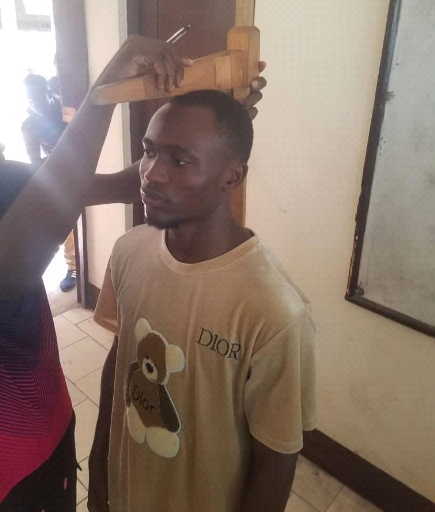
Photo 1 :Mesuredelataille
Photo 2 :Mesuredelamassecorporelle
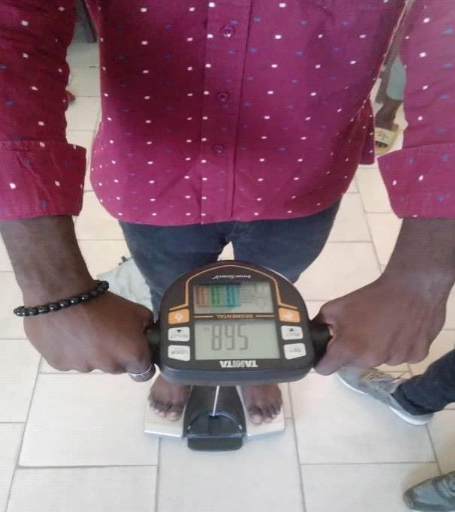
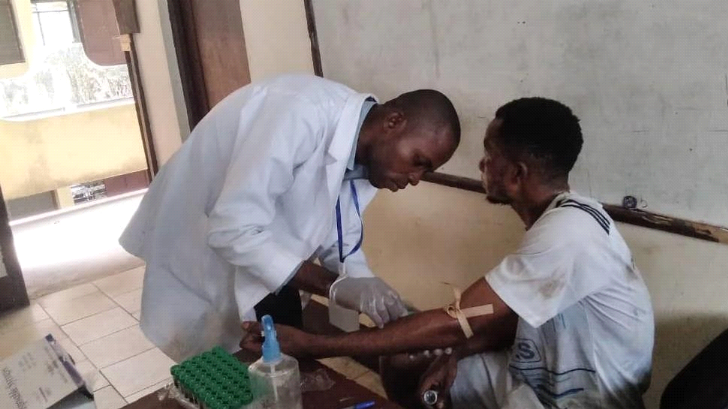
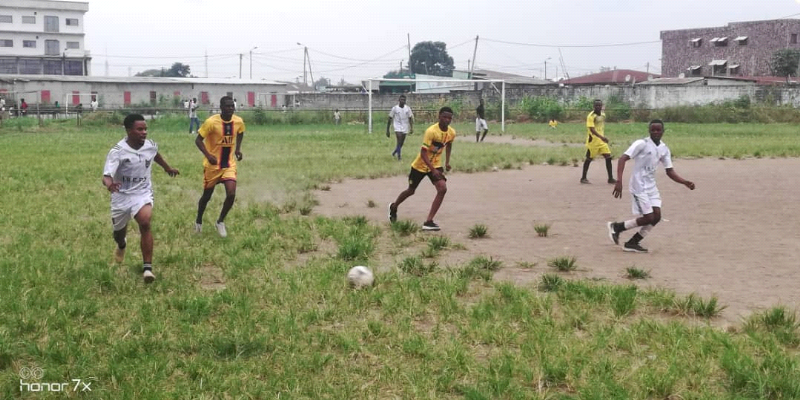
Photo4 :Déroulement dumatch test à
l'ISEPS
Photo 3 :Prisedesang
TABLE DES MATIERES
|
IN
MEMORIUM............................................................................................................
|
i
|
|
Dédicace.....................................................................................................................
|
ii
|
|
Remerciements..............................................................................................................
|
iii
|
|
Liste des sigles et
abréviations.............................................................................................
|
iv
|
|
Liste des
tableaux...........................................................................................................
|
vi
|
|
Liste des
figures.............................................................................................................
|
vii
|
|
Liste des
photos.............................................................................................................
|
viii
|
|
Sommaire.....................................................................................................................
|
ix
|
|
INTRODUCTION...........................................................................................................
|
1
|
|
Contexte et
justification.....................................................................................................
|
1
|
|
Problématique...............................................................................................................
|
2
|
|
Question
principale .........................................................................................................
|
5
|
|
Questions
secondaires ......................................................................................................
|
5
|
|
Hypothèseprincipale.......................................................................................................
|
5
|
|
Hypothèsessecondaires....................................................................................................
|
5
|
|
Objectifgénéral..............................................................................................................
|
5
|
|
Objectifsspécifiques........................................................................................................
|
6
|
|
Intérêt de
l'étude............................................................................................................
|
6
|
|
Structuration du
travail.....................................................................................................
|
6
|
|
Chapitre I : REVUE DE LA
LITTERATURE........................................................................
|
7
|
|
I.1.
SystèmeImmunitaire...................................................................................................
|
7
|
|
I.1.1.
Définition.............................................................................................................
|
7
|
|
I.1.2. Composant du
Systèmeimmunitaire..............................................................................
|
8
|
|
I.1.2.1. Immunitéinnéeou
naturelle.......................................................................................
|
8
|
|
I.1.2.1.1. Les acteurs de
l'immunitéinnée..............................................................................
|
10
|
|
I.1.2.2. Immunité adaptative
ouspécifique...............................................................................
|
14
|
|
I.1.2.2.1. Les acteurs de l'immunité
adaptative.........................................................................
|
15
|
|
I.1.3. Cellules
immunitaires...............................................................................................
|
16
|
|
I.1.3.1. Rôle et fonction des cellules
immunitaires.....................................................................
|
17
|
|
I.2. Exercice physique et cellules
immunitaires........................................................................
|
19
|
|
I.3. Protéine
C-Réactive....................................................................................................
|
22
|
|
I.3.1.
Définition...............................................................................................................
|
23
|
|
I.3.2.
Structure................................................................................................................
|
23
|
|
I.3.3. Synthèse et localisation de la
CRP.................................................................................
|
24
|
|
I.3.4. Les fonctions de
CRP................................................................................................
|
24
|
|
I.3.5. CRP
marqueurd'inflammation.....................................................................................
|
25
|
|
I.3.6. Rôle de la protéine
C-Réactive......................................................................................
|
25
|
|
I.4. Sport et
Réhydratation.................................................................................................
|
26
|
|
I.5. Sport et
Déshydratation................................................................................................
|
27
|
|
I.6.
Football..................................................................................................................
|
28
|
|
Chapitre II : MATERIEL ET
METHODES..............................................................................
|
30
|
|
II.1.
Matériel..................................................................................................................
|
30
|
|
II.1.1. Mesure de la
taille...................................................................................................
|
30
|
|
II.1.2. Mesure de la masse
corporelle....................................................................................
|
31
|
|
II.1.3. Sinothinker
SK8800................................................................................................
|
32
|
|
II.1.4.
Electrophotomètre...................................................................................................
|
32
|
|
II.2.
Méthodes...............................................................................................................
|
33
|
|
II.2.1. Cadre et type
d'étude...............................................................................................
|
33
|
|
II.2.2.
Population............................................................................................................
|
33
|
|
II.2.3.
Echantillon............................................................................................................
|
33
|
|
II.2.4.
Critèresd'inclusion.................................................................................................
|
33
|
|
II.2.5. Critères de non
inclusion...........................................................................................
|
33
|
|
II.2.6.
Critèresd'exclusion................................................................................................
|
33
|
|
II.2.7.
Protocoleexpérimental..............................................................................................
|
33
|
|
II.2.8. Variables
étudiées.................................................................................................
|
34
|
|
II.2.9.
Considérationéthique...............................................................................................
|
34
|
|
II.2.10.
Analysestatistique................................................................................................
|
34
|
|
Chapitre III :
RESULTATS.............................................................................................
|
36
|
|
Chapitre IV :
DISCUSSION................................................................................................
|
42
|
|
CONCLUSION.............................................................................................................
|
47
|
|
PERSPECTIVES............................................................................................................
|
48
|
|
Référencesbibliographiques...............................................................................................
|
49
|
|
Annexes......................................................................................................................
|
62
|
|