Section 2: Attitudes toward English as Medium of
Instruction
Q7: How do you feel about the transition from French to
English as the medium of instruction?
31
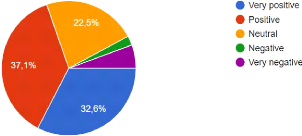
Figure 2.10. Respondents' Feeling toward the Shift to
EMI
The responses concerning students' attitudes towards the
transition from French to English as the medium of instruction indicate a
generally positive inclination. A substantial proportion of respondents
expressed favorable sentiments, with 32.6% reporting feeling
'very positive' and an additional 37.1%
indicating a 'positive' outlook. This combined
positive sentiment (69.7%) suggests a considerable level of
acceptance or optimism regarding the linguistic shift. 22.5%
of respondents took a 'neutral' stance, potentially
reflecting uncertainty or a lack of strong opinion at this stage. Conversely, a
smaller segment of the student population expressed negative feelings, with
2.2% indicating a 'negative' response and
5.6% reporting a 'very negative' sentiment.
These results suggest a general openness and even enthusiasm for the shift to
EMI, However, the presence of neutral and negative responses, even though
limited, highlights the need to address concerns related to language
proficiency, support systems, and inclusive implementation to ensure all
students benefit equally from the transition.
CHAPTER TWO METHODOLOGY, DATA ANALYSIS AND
INTERPRETATION
Q8: How comfortable are you with studying in
English?
32
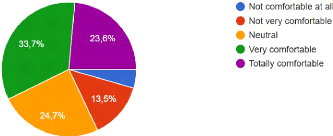
Figure 2.11. Respondents' Comfort with
English
The survey results regarding students' comfort with studying
in English indicate a generally favorable disposition, though with a noticeable
degree of variation. A significant proportion of respondents 23.6%
reported being totally comfortable, and 33.7%
indicated they are very comfortable, totaling
57.3% of students expressing high levels of ease with English
as a medium of instruction (EMI). This suggests that over half of the sample
feel confident navigating academic content in English, possibly reflecting
previous exposure to the language through schooling, media, or self-directed
learning.
Meanwhile, 24.7% selected a neutral stance,
which may signal uncertainty, limited experience with EMI, or a moderate level
of comfort that could improve with additional support. On the less favorable
end, 13.7% reported being not comfortable,
and the remaining respondents (4.5%) were not
comfortable at all. This combined 18.2% suggests a
minority of students face real challenges in adapting to EMI, potentially due
to insufficient language proficiency, anxiety, or lack of institutional
support.
CHAPTER TWO METHODOLOGY, DATA ANALYSIS AND
INTERPRETATION
Q9: Do you believe the shift to English will enhance your
academic and professional opportunities?
33
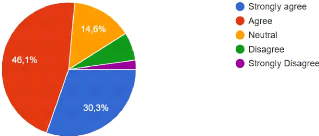
Figure 2.12. EMI and Academic and Professional
Opportunities
The data reveals a predominantly optimistic view among
students regarding the potential benefits of shifting to English as the medium
of instruction (EMI). A substantial 76.4% of respondents
either strongly agree (30.3%) or
agree (46.1%) that this transition will
enhance their academic and professional opportunities.
A smaller portion of the population (14.6%)
selected a neutral response, indicating either uncertainty or a wait-and-see
approach. On the contrary, only a minority expressed skepticism, with
6.7% disagreeing and 2.2% strongly
disagreeing with the idea that EMI will improve their prospects. While the
overwhelming majority anticipates enhanced opportunities, the presence of
neutral and negative viewpoints warrants further investigation to understand
the underlying concerns and to ensure that the potential benefits of the EMI
policy are effectively communicated and realized for all students.
CHAPTER TWO METHODOLOGY, DATA ANALYSIS AND
INTERPRETATION
|